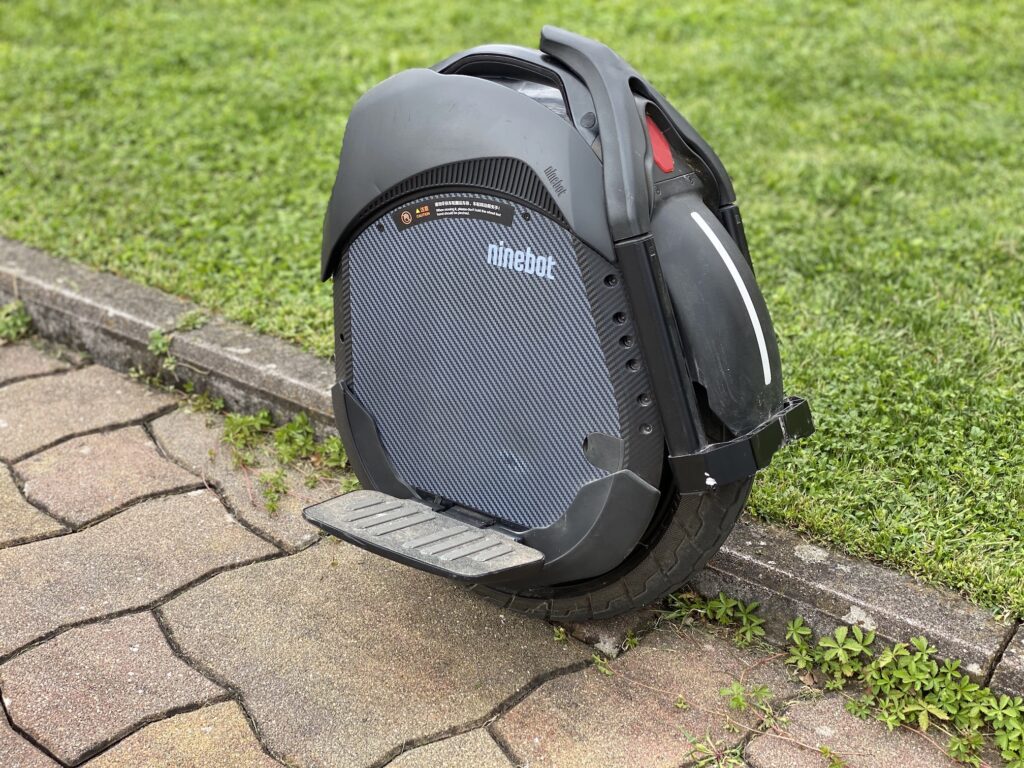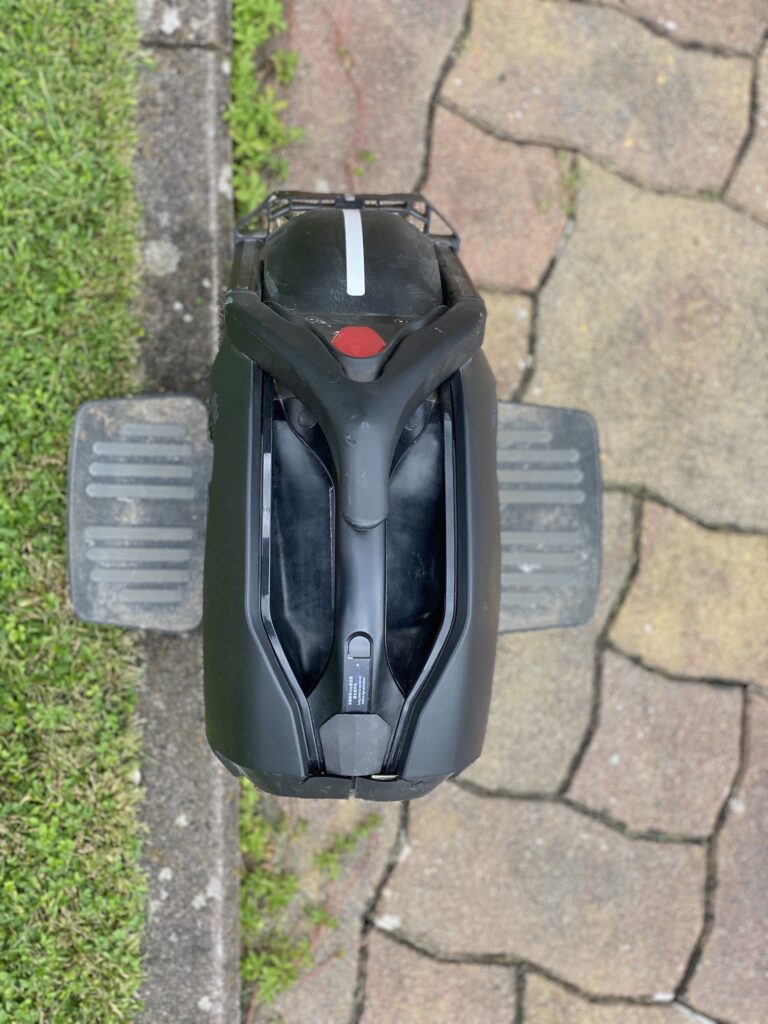
Ninebot Z10 – The Machine

Scooter sind dir zu Mainstream, E-Bikes zu langweilig und du bist ständig auf der Suche nach einem individuellen Fortbewegungsmittel, das den Adrenalinspiegel steigen lässt? – Gut, eventuell könnte dieses heftige Gerät genau das Richtige sein.
Wie lange dauert es bis man ein elektrisches Einrad beherrscht?

Einen halbwegs guten Gleichgewichtssinn vorausgesetzt, kann man nach ca. einer Stunde erste Runden auf einem elektrischen Einrad drehen. Das macht auch lange genug mit einfachen, weniger extremen Geräten viel Spaß und bietet dem Körper die Chance gänzlich unbekannte Bewegungsabfolgen zu erlernen.

Evolution der elektrischen Einräder

Mein erstes Einrad war ein Ninebot One E+ , ein sehr zuverlässiges, stylisches und so gar nicht gewöhnliches Fortbewegungsmittel. Damit war ein erstes Kennenlernen dieser alternativen Art der Fortbewegung spielerisch möglich. Auch meiner Frau bereite das Fahren mit dem E+ viel Freude, sodass wir unseren Fuhrpark kurz darauf um das neuere, noch hübschere und kompaktere Modell Ninebot S2 erweitert haben.
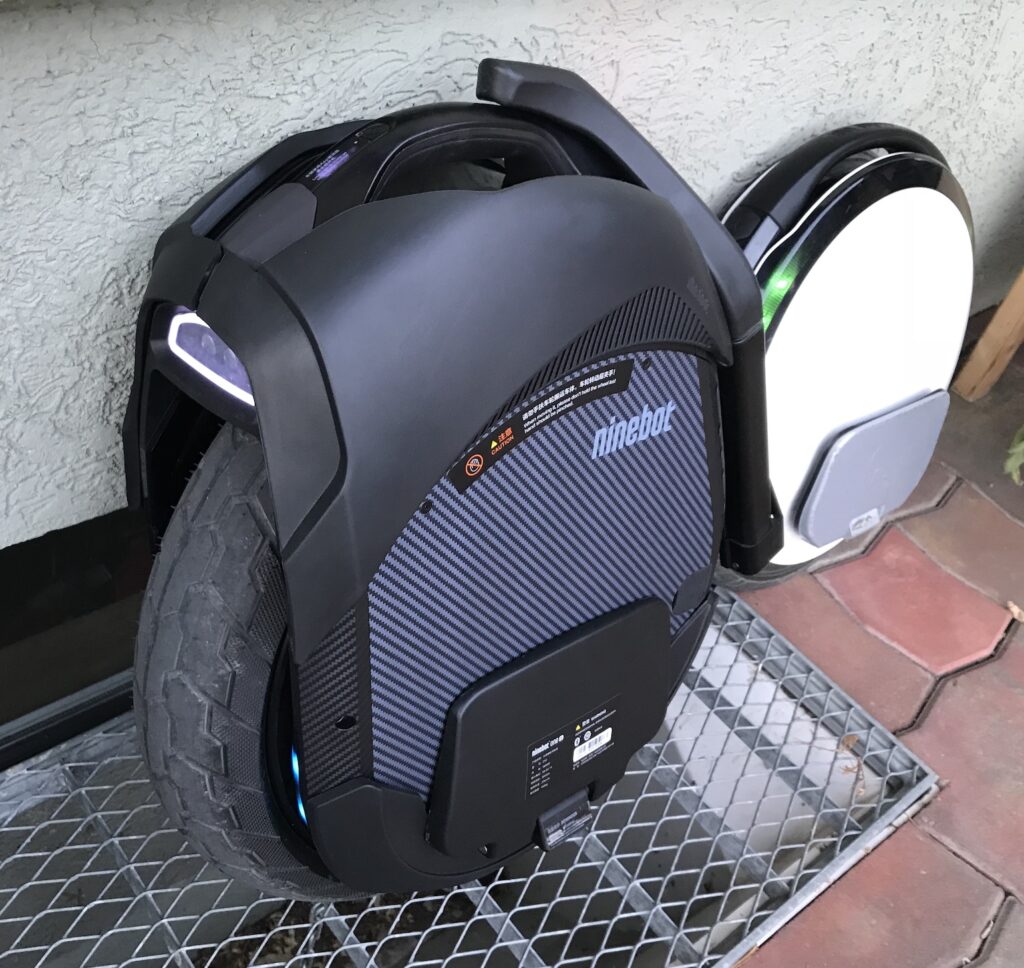
Ninebot E+ und S2 sind Top, warum also etwas Neues?

Eine Sache hat mich beim S2 als auch beim E+ immer gewurmt… jeder mit 250Watt gepimpte Pensionist konnte im Limiter seines E-Bikes mit leichtem Geschwindigkeitsüberschuss an mir vorbeiziehen. Konstantes Fahren im Limiter wird beim E+ mit gerade noch erträglichem Piepton quittiert, der S2 macht das Ganze dann auch noch ziemlich Lautstark. Der Fahrer wird bei 23-25km/h mit sanft anhebenden Pedalen gemahnt die Geschwindigkeit zu reduzieren, dies führte zum Wunsch nach etwas mehr Höchstgeschwindigkeit.

Die auch international sehr überschaubare Community der EUC-Rider tauscht sich in einem Forum gerne über diverse neue Produkte aus und bietet dank vieler technisch versierter User die Möglichkeit sich einen Überblick zu verschaffen.

So richtige Knaller waren allerdings nicht dabei, Gotway konnte schon immer schnelle, starke Wheels bauen, die Verarbeitungsqualität und zahlreiche Crash-Videos auf Youtube, hielten mich aber ab dieses Wagnis einzugehen.

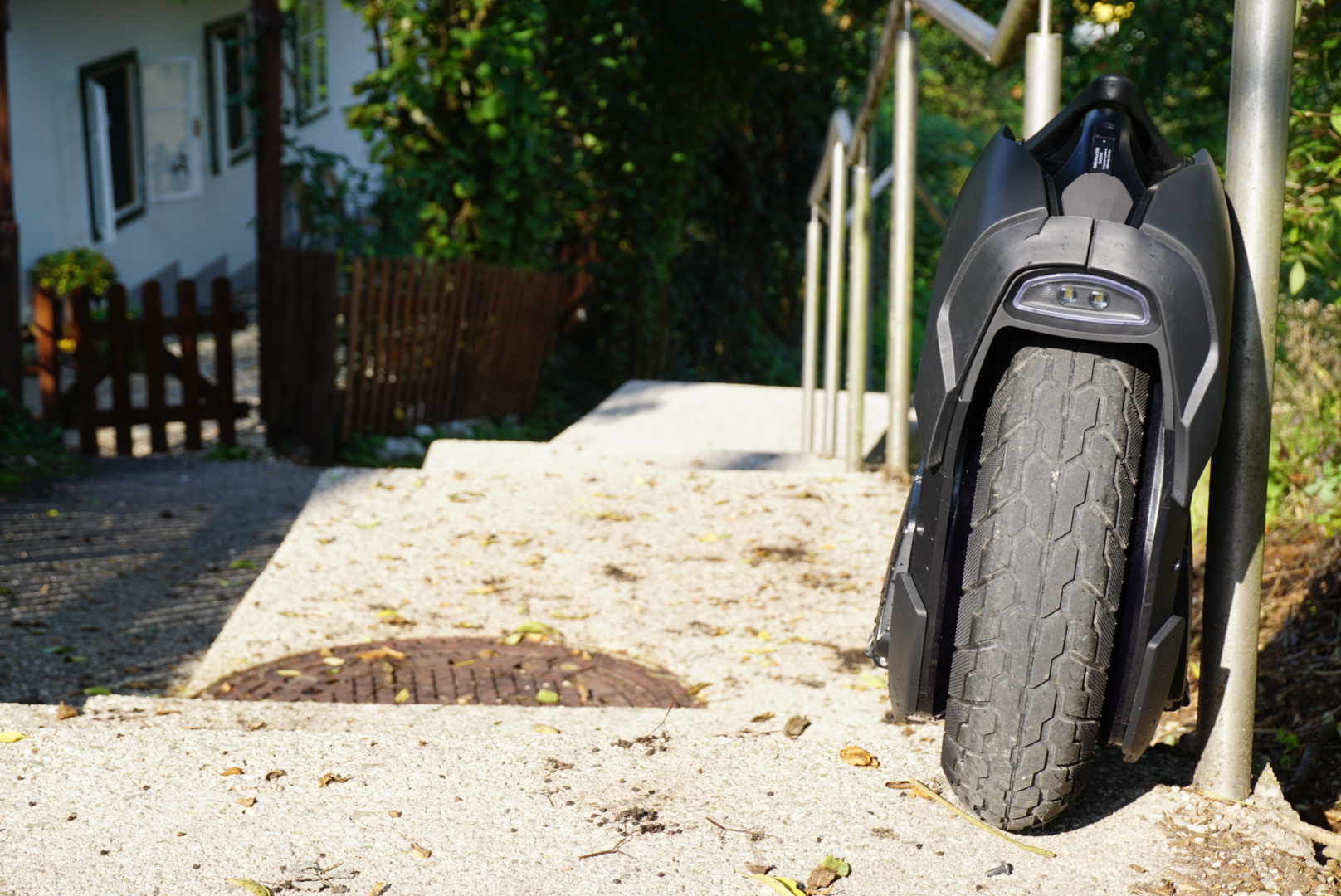
Ninebot Segway stellte dann allerdings ein Produkt in Aussicht, was eine Revolultion in diesem Sektor versprach… Dicke 4,1″ Tubeless Reifen im Moto-Look, ein stylisches Gehäuse und einen äußerst wuchtiges Design ließen einen vermuten, dass Batman im nächsten Streifen auf ein EUC umsatteln könnte.
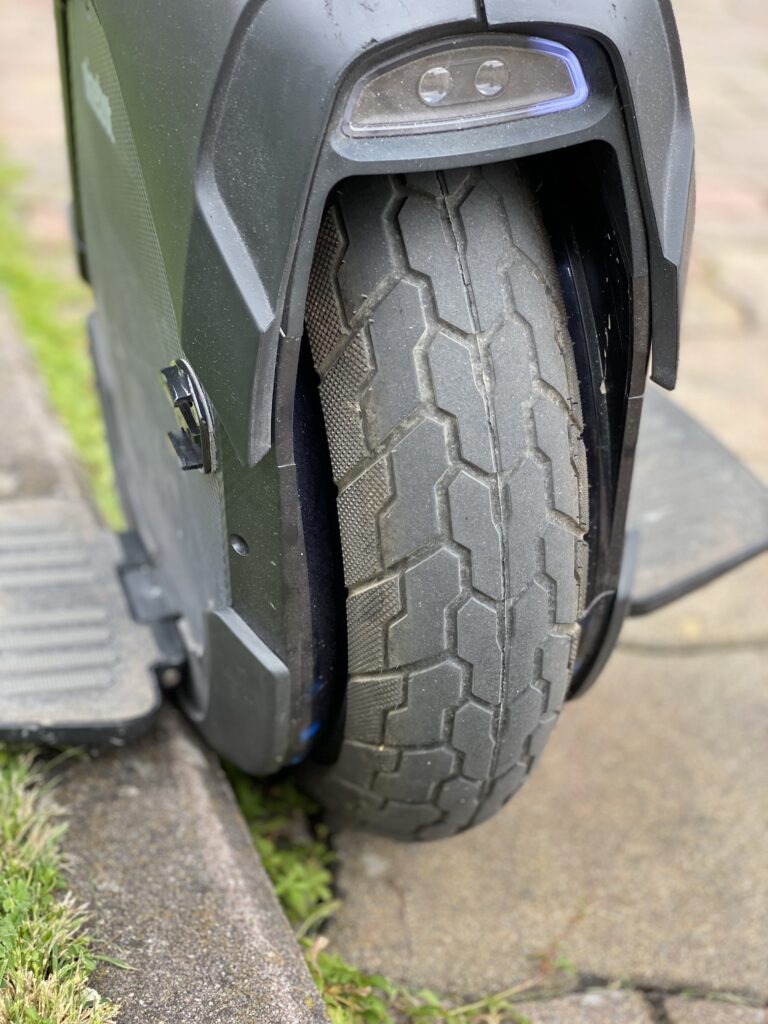
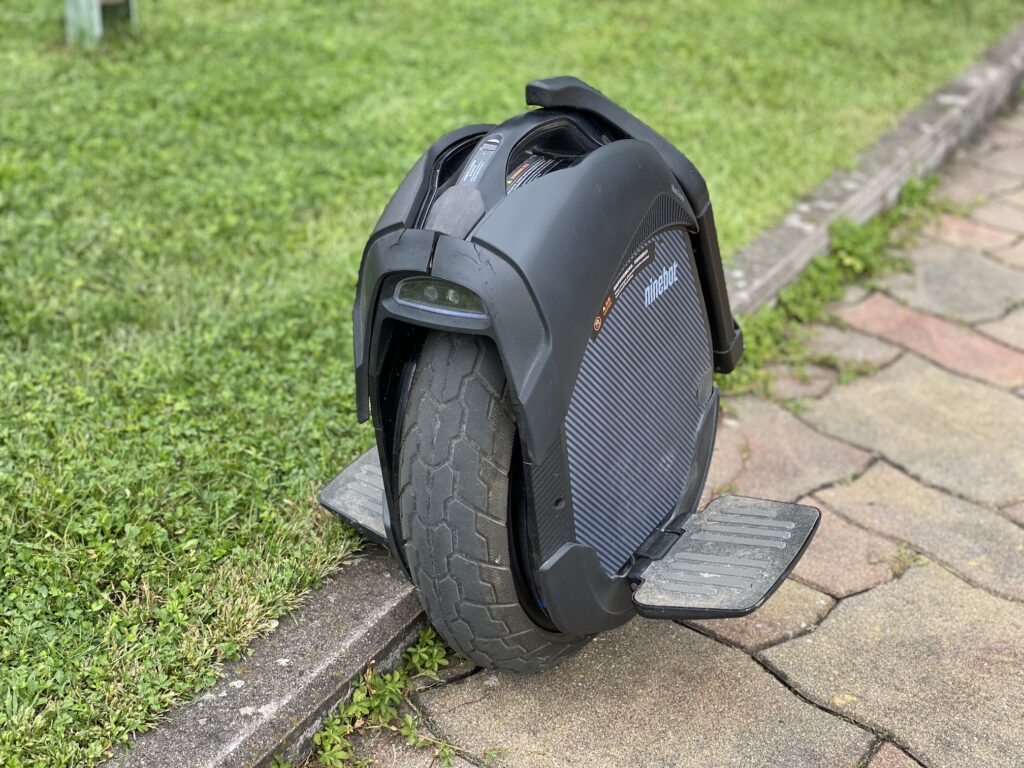
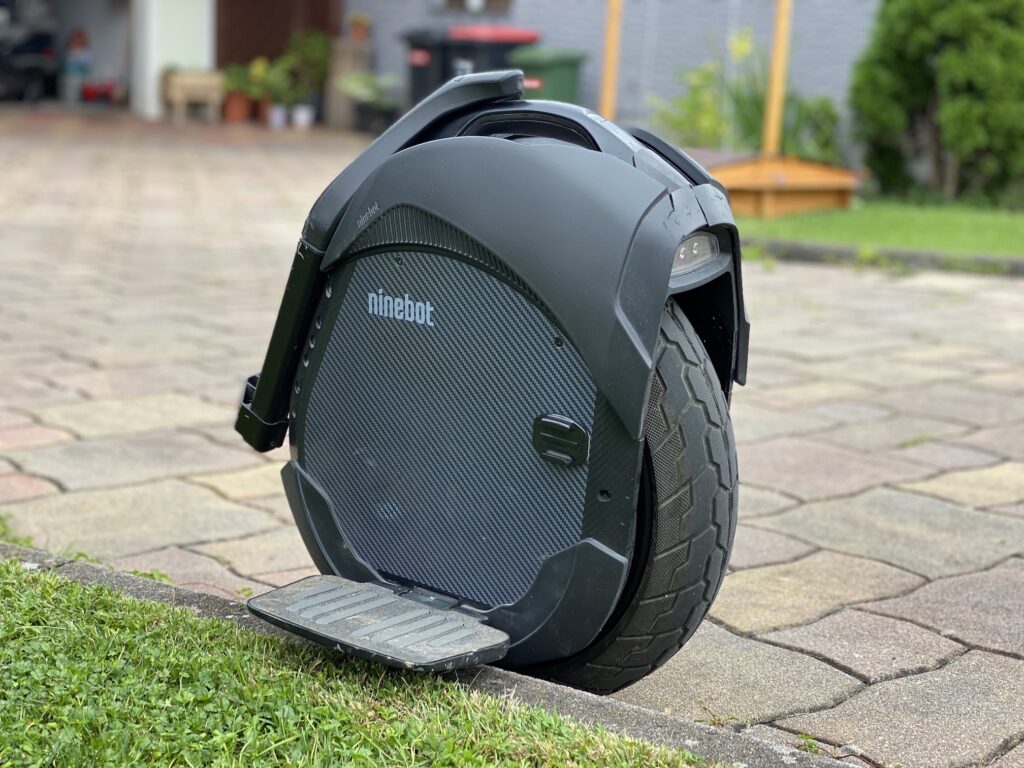
Der Ninebot Z6/Z8/Z10 mit gewohnt makelloser Verarbeitungsqualität konnte mich mit spektakulären Leistungsdaten begeistern und gleichzeitig machte mir die Vorstellung, ein Einrad mit bis zu 46km/h zu bewegen, ein wenig Angst.

Reserven sind immer gut und man muss die Grenzen ja nicht unbedingt ausloten, oder?

Erste Testfahrten, nach bestimmt mehr als 1000km auf elektrischen Einrädern stimmten mich positiv, auch damit schnell klarzukommen.

1 x Hirn neu kalibrieren, bitte…

Sobald das Teil also beim Händler des Vertrauens verfügbar war, wurde geordert. Wenn schon, denn schon, also musste es das Topmodell Z10 werden.

Gut verpackt, schön verarbeitet und mit allerhand Zubehör ausgestattet kam das Paket an. Vor der ersten Ausfahrt noch Schutzpads, Spritzschutz,Trolley-Handle und Griptape montiert konnte es dank vorgeladenem Akku auch gleich losgehen…

Das Fahrverhalten war nun aber gänzlich anders als bisher gewöhnt.

Mit montiertem Fender und Trolley-Handle wiegt der Z10 satte 26kg und erstaunlicherweise spürt man das gar nicht so sehr auf den ersten Metern. Der S2 als auch der etwas steifer abgestimmte E+ quittieren starkes Beschleunigen immer mit einem kurzen wegtauchen der Pedale, was beim Bremsen sogar für ein subjektiv hohes Sicherheitsgefühl beim Bremsen sorgt. Der Z10 hingegen ist “BRETTLHART”, die Pedale stehen waagrecht wie ein Bock und auch 100kg Fahrer bringen den Z10 hier nicht in Verlegenheit unkontrolliert wegzutauchen.

Ab ca. 20km/h kommt eine weitere Eigenheit zum Vorschein, welche der hohen rotierenden Masse geschuldet ist. Ein 1800W Motor, samt steifem, mopedähnlichen Reifen führt dazu, dass sich der Z10 regelrecht aufrichten möchte, sobald man eine schnelle Kurve einleiten möchte. Bei noch höheren Geschwindigkeiten muss die bisher gewohnte Fahrtechnik vollkommen über Bord geworfen werden, voller Körpereinsatz inkl. Hüfte zur Kurveninnenseite bringen, steht dann im Motostyle am Programm.

Dieses Fahrverhalten, am Anfang noch leicht irritierend, hat aber gerade bei hohen Geschwindigkeiten auch seine Vorteile. So bringt den Z10 nichts so schnell aus der Spur, kleinere Schlaglöcher, Steine oder auch Wurzeln werden einfach weggebügelt sofern der Reifendruck stimmt.

Bei herkömmlichen elektrischen Einrädern mit Schlauchreifen sind aufgrund der meist sehr weichen Karkasse Luftdrücke von 55-65psi von Nöten. Zum Einen ist das notwendig um den Reifen vor Durchschlägen zu schützen, aber auch um den Reifen nicht zu stark walken zu lassen, was ein schwammiges Fahrgefühl zur Folge hätte.

Beim Z10 fahre ich 20-32psi, darunter wird’s schwer enge Turns zu fahren, darüber kommt jede kleine Unebenheit durch.

Den Druck den es auf die Pedale braucht um auch steile Anstiege zu meistern habe ich anfangs unterschätzt, ein perfekter Kletterer ist der Z10 aber ohnehin nicht.

Seine Stärke liegt im Geschwindigkeitsbereich von 25-35km/h und entspanntem Carven.

Es ist gut ein Wheel zu bewegen, welches auch bei 35km/h noch ausreichend Reserven bietet und auch ich habe schon einige Male den Begrenzer bei 46km/h aktiviert.

Mein Z10 ist nun knapp über 2Jahre alt und weist quasi keinen Verschleiß auf, die Reifen sind nach 1000km quasi im Neuzustand und der Akku zeigt auch noch keinerlei Schwächen.

Neueste EUC’s von Kingsong und Inmotion zeigen wo der nächste Evolutionsschritt liegt – gefederte Einräder sollen das Fahrverhalten nochmals sicherer machen … nachdem ich bei diesen Modellen aber schon von anderen Schwächen lesen musste, wird ein solcher Test wohl noch auf sich warten lassen.

Gespannt warte ich darauf ob Ninebot Segway einen würdigen Nachfolger in den nächsten Jahren präsentieren wird, bis dahin bin ich erstmal bestens bedient mit dem Z10 😉

Übrigens … was der Z10 noch so kann … es stecken 2 Bluetooth Module in diesem Teil, eines zum Verbinden mit den Apps zur Überwachung der Fahrwerte, Einstellungen etc und ein Modul wird verwendet um damit den im Gehäuse liegenden Lautsprecher zur Musikwiedergabe nutzen zu können. Das finde ich ja weniger brauchbar, aber für Navigationsansagen z.B. finde ich das schon ganz praktisch.
Starboard Lima 2021 – Review

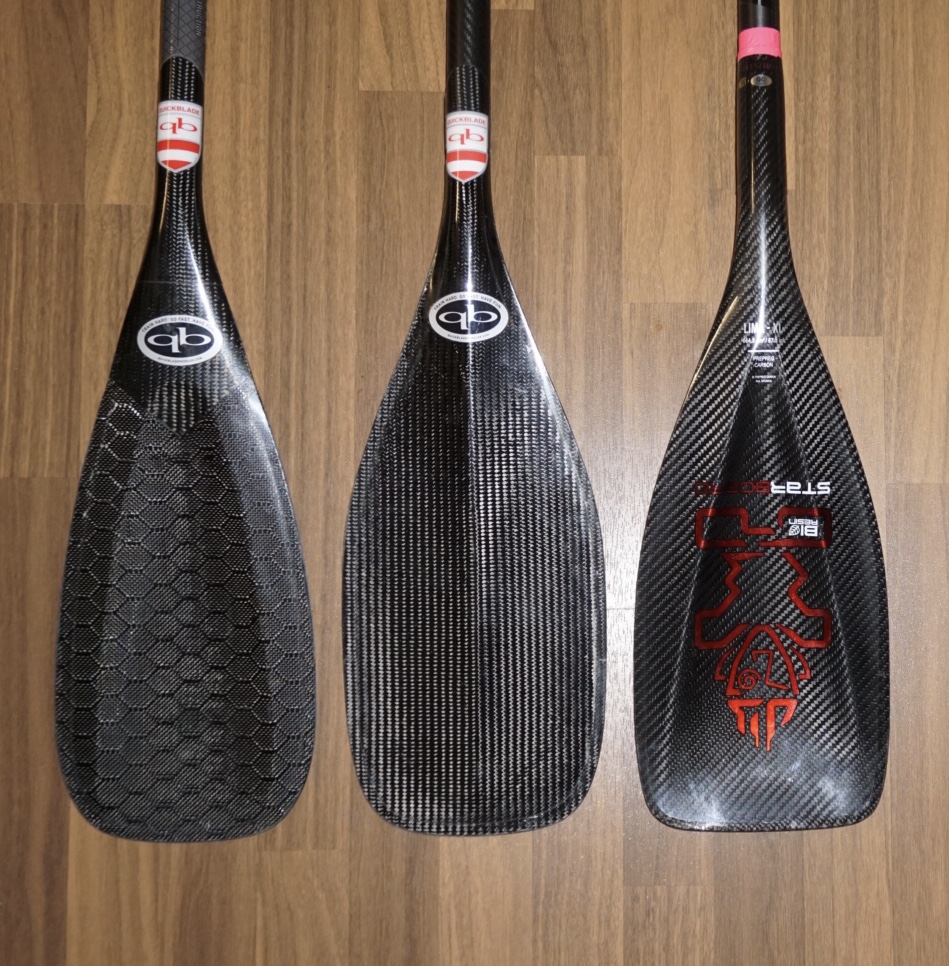
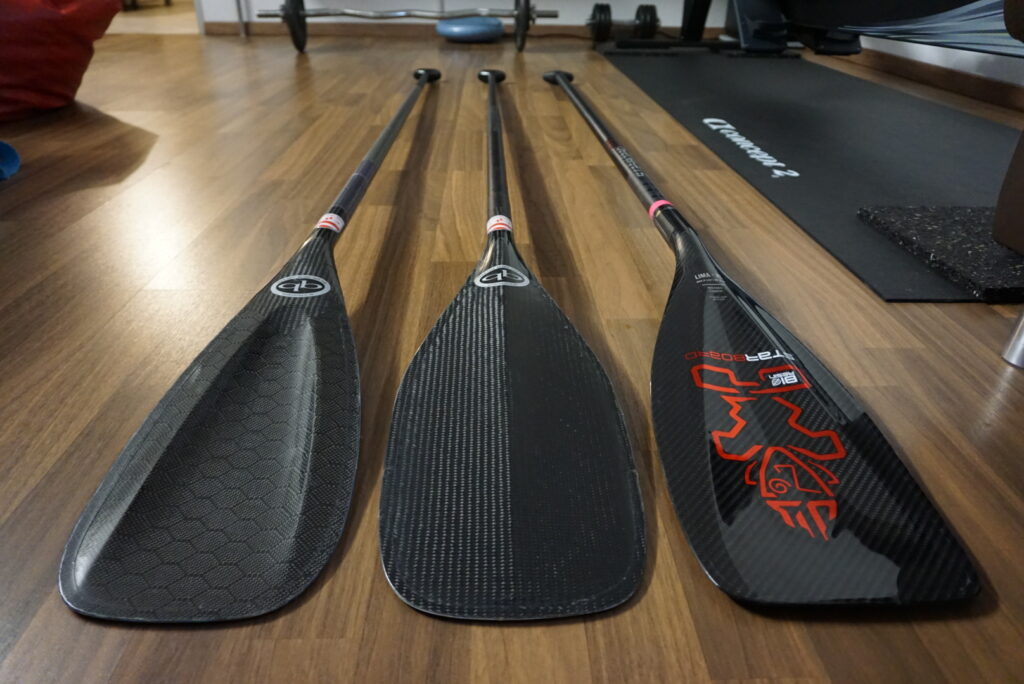
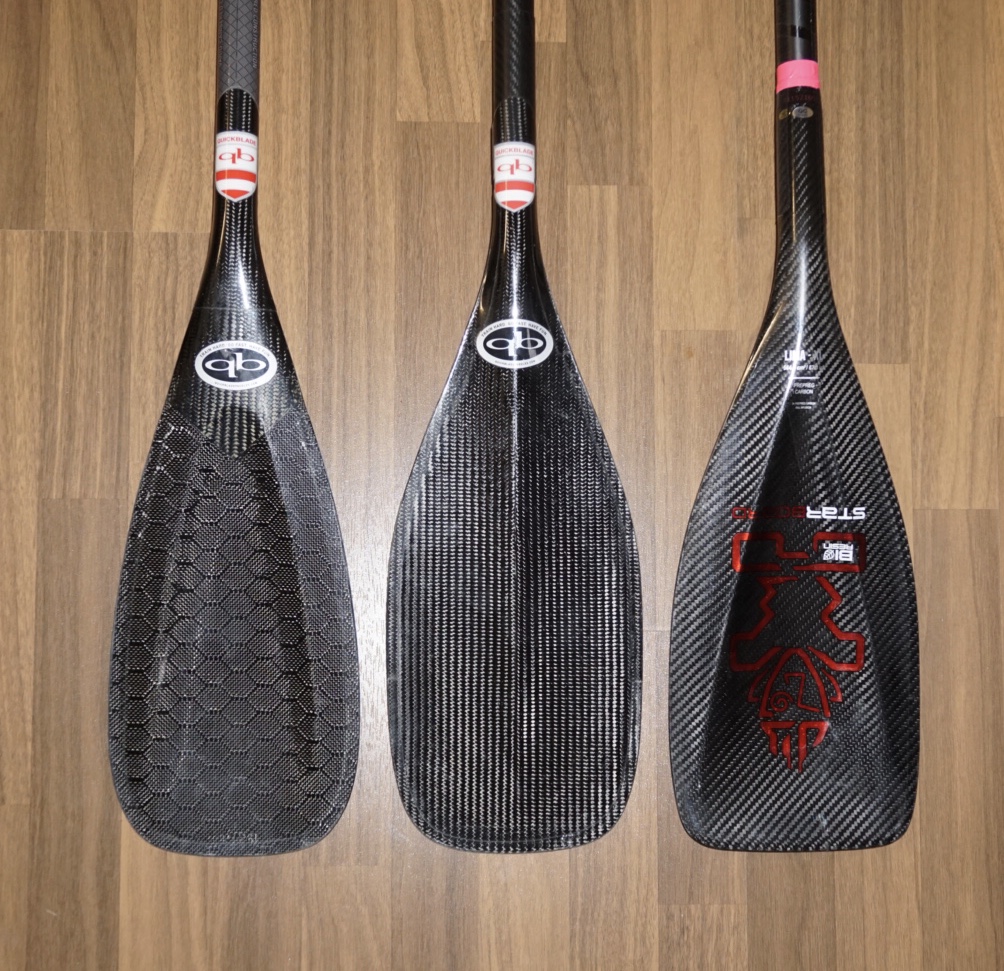
Quite some time ago I announced to do the comparison of the Lima 2021 vs Quickblade UV88 & Quickblade Trifecta 96.

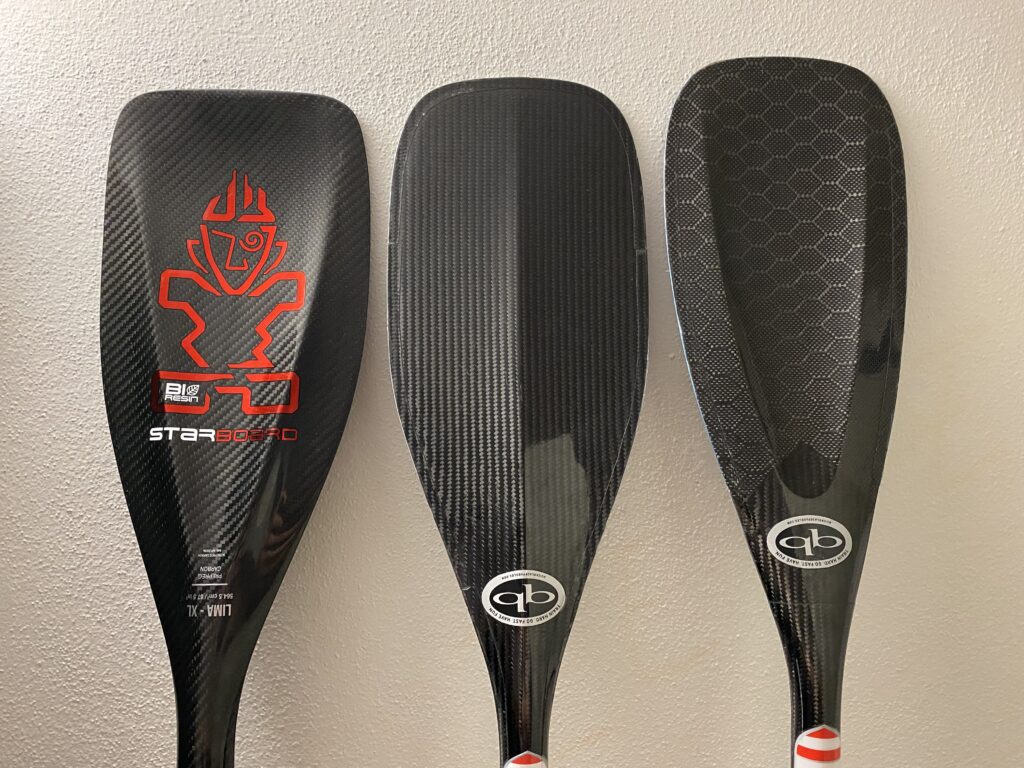
First of all I want to let you know that my first impressions got confirmed every time I went back and forth testing those premium race paddles. On the catch the Lima has some rapid pressure build-up and it’s very easy to keep control, no matter what power you put on the blade.

Easy on the catch and instant transfer of power

In the past weeks I found myself always getting a grip on the Lima when choosing my paddle, I do get the best distance per stroke and I feel totally connected from catch to exit.

Lightweight Baby …

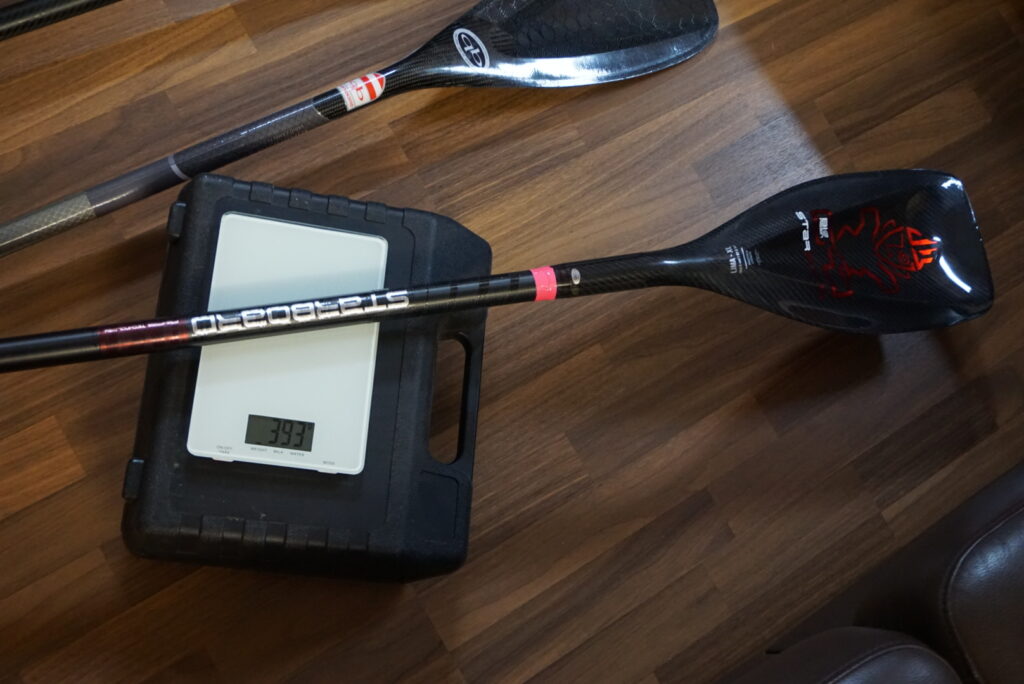
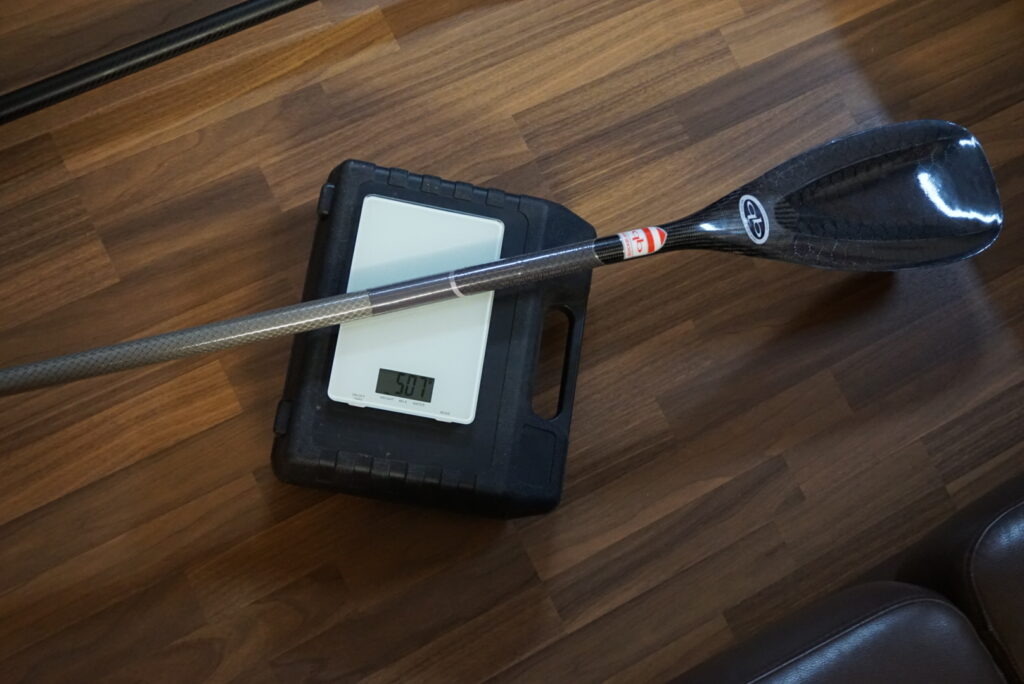
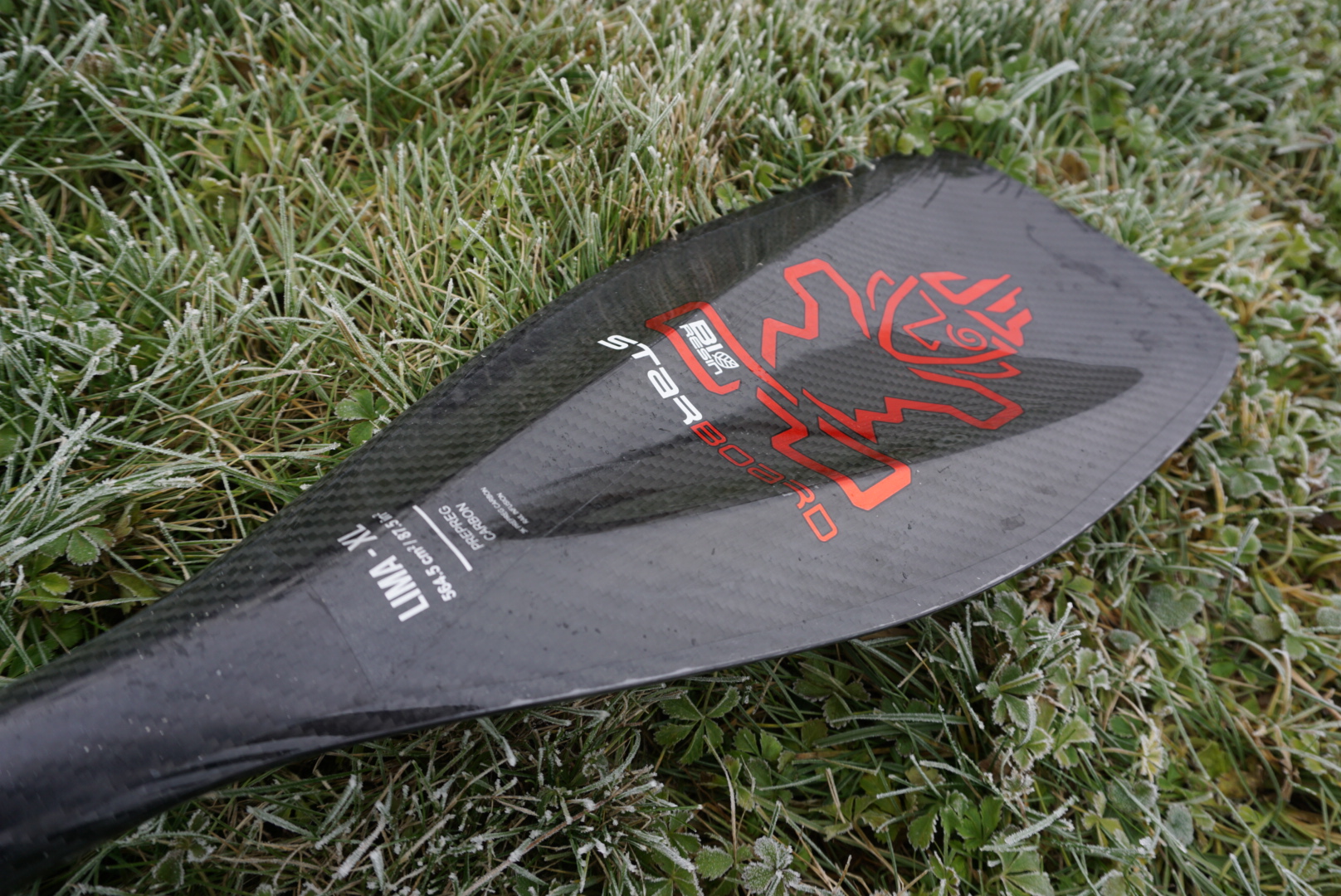
The weight of the uncut paddle was exactly on par with the numbers you can read on the official starboard website (in this case 411g for 219,5cm) . Cut to 194cm the weight of 385g is incredibly low, while being tough enough to withstand even heavy sprints with full power.

Construction

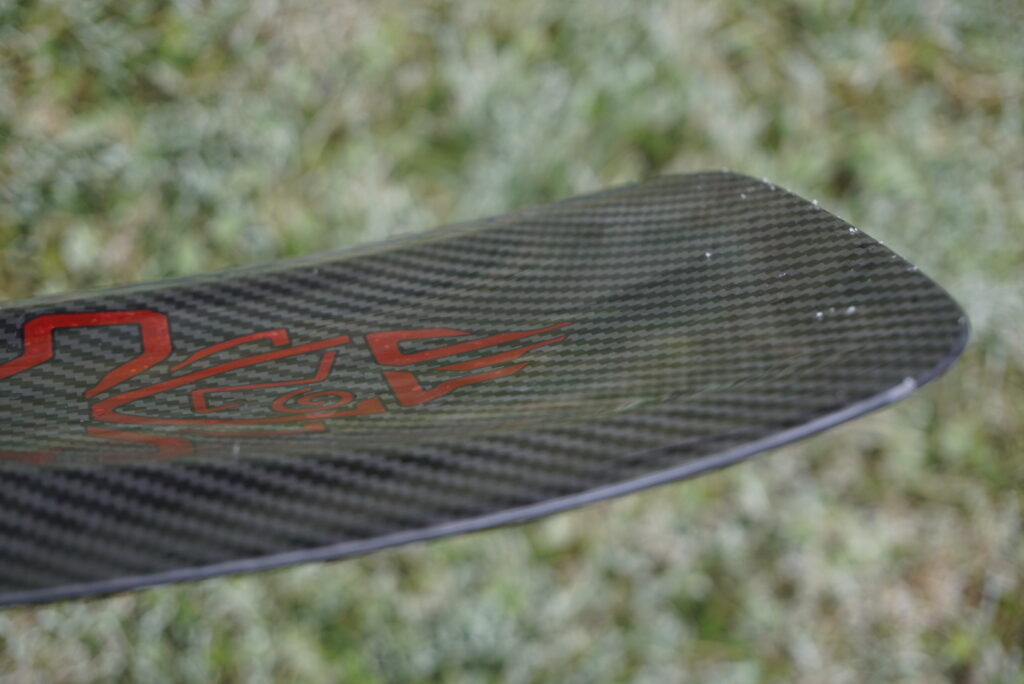
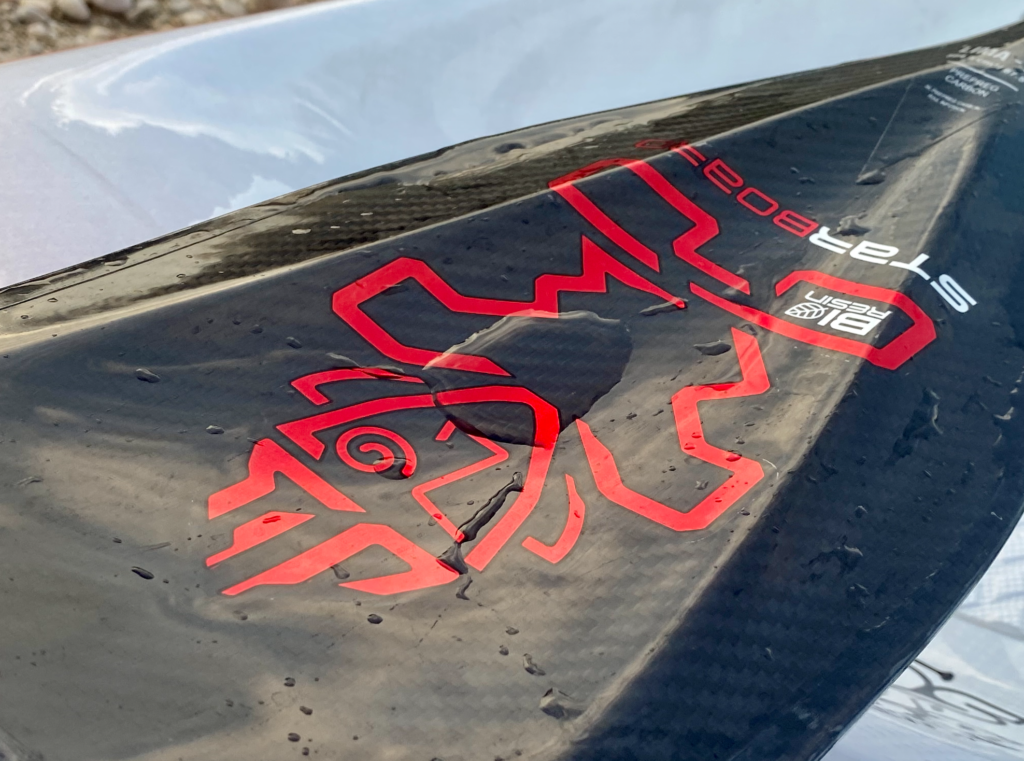
The construction is impeccable and there are no sharp edges that’ll screw up your board. When having a closer look to the edges of the blade you can see the 3K carbon infusion rail which begs for avoiding ground contact.

I put a 3M protective layer on the edges of the blade to protect the board and paddle

Initially I had to work on the exit phase as the Lima quits pulling to far behind your feet with getting stuck. This is no longer a problem and I’d say the Lima is definitely easier to paddle correctly compared to the Quickblade UV88 , but when comparing it with the Trifecta 96 I do have mixed feelings. The Trifecta 96 has a very smooth pressure build up and lots of power during the power phase, but the aggressive hooked blade tip of the Lima serves for such a connected feel the Trifecta doesn’t provide. Guess what… there is an advantage of the Trifecta Design, due to the forgiving blade shape it’s easy to steer the board and when you missed the sweetspot at the exit it won’t punish you.

Starboard is claiming that you don’t need to worry about paddle alignment and this is totally true, period.

It sounds like I’ve found the perfect paddle for my current paddling style. Yes, it might be my go to paddle but there are two more things to consider …

Stiffness/Flex

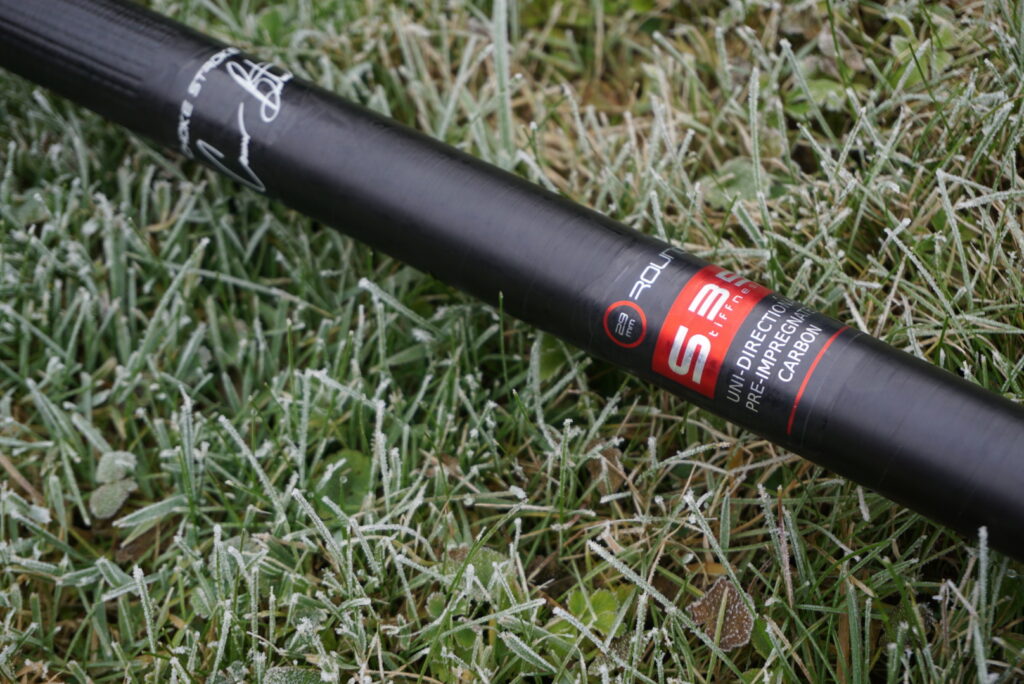
The shaft bends a lot when putting lots of power in your stroke

Flex in the shaft is not a bad thing as a paddle feels easier on your joints and shoulders, but besides loosing some power when stored energy is not given back until you’ve finished the power phase it’s also the way a shaft flexes. While the diamond elite shaft of the newest Quickblade paddles feel very stiff, they do have some flex in the upper area next to the grip. Some paddlers do find them too stiff and I could never understand that, until I did lots of sprint training at the end of this summer. If you’re not really carefully with warming up and knowing your limits, you can easily hurt yourself while trying to snap your QB 😀

When doing longer sessions with average speeds of 8-8,5km/h I never had a feeling that there is too much flex in the Limas shaft. The opposite was true… after some kilometers upwind, the shaft felt incredibly stiff without putting to much stress on my elbows or my shoulders. I’d say for most paddlers up to 80kg the S35 shaft should be perfectly fine, if you love that firm shafts you could try the S30 shaft or look elsewhere.

To be fair I have to adress that Starboard is offering an even stiffer shaft than the S35, but when sprinting I can feel that there is still some energy stored in the shaft when releasing the blade.

So far so good, but wait a minute … I said that there are two things to consider!

“New Super Handle …”

The type of handle you are most comfortable with, depends on your personal preferences …

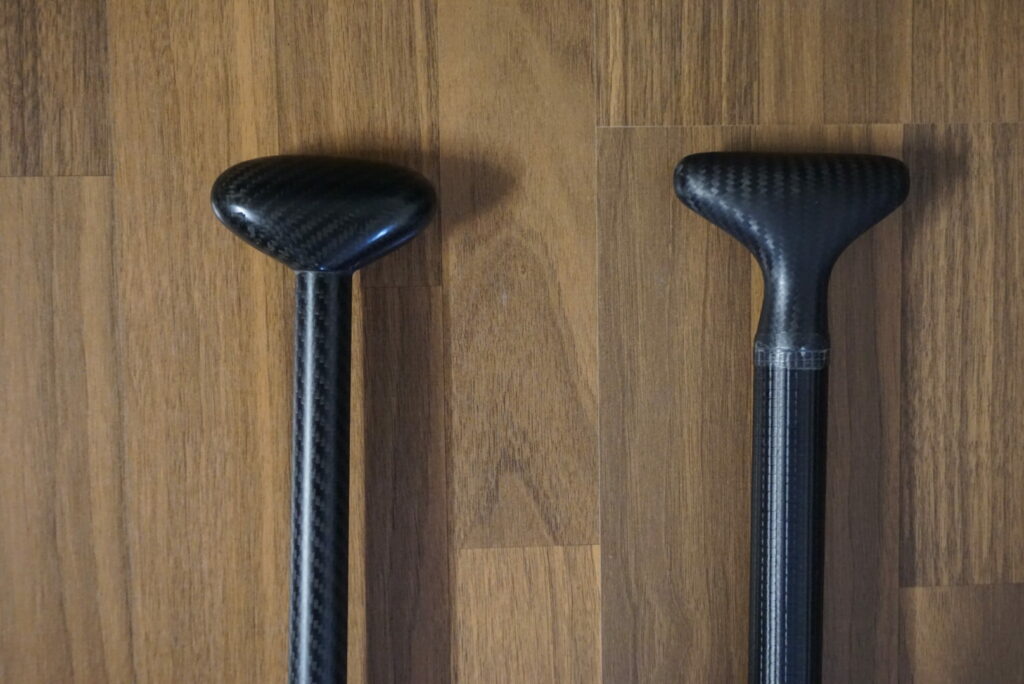
While I totally love the hand flattering and perfectly sized QB handle, I really can’t understand why Starboard is offering a stunning 9 (!!!) shaft options, while only offering one type of handle. The so called New Super handle is a handle which takes time getting used to. I do feel comfortable with it, but the QB Handle fits better when you’re not gripping parallel to your knuckles. While some paddlers found this handle quite okay, I doubt that Starboard will gain a large fanbase of it.

Avoid putting your hand in an ergonomically bad position!

Final Verdict

The deep concave serves for instantanous grip at the catch

Naming a 87,5sq inch blade a XL paddle feels strange, but the deep concave serves for excellent grip and direct feel some >95sq inch paddles can’t provide. If you’re searching for an extremely lightweight paddle with lots of shaft options, you’ll definitely want to have a look at this great paddle.

Once used to this paddle, it is difficult to feel comfortable with other paddles.

Paddlers below 90kg who prefer higher cadence and aren’t as fast or strong as the Hasulyos, Boothy & Co shouldn’t be shy to keep an eye on the smaller blade options Starboard provides.

Here are my subjective impressions expressed in numbers:

Starboard Lima S35 XLQB UV88QB Trifecta 96Croslake Marin 2Jantex Ypsilon soft shaft 87″ 2 piece
Ease of Catch97988
Grip at Catch98777
Grip Power Phase98887
Exit57888
Stiffness689108
Haptic79879
Weight97767
Handle5101075
Quality88879
Price32274
QB UV88 with diamond elite shaft model 2019, QB Trifecta 96 2019 round tapered shaft, Crolake Marin 2 7,5″ wide, Yantex Ypsilon Medium Minus 87sqinch soft shaft 2 piece

Coming up next: Starboard LIMA 2021 vs Quickblade

This year I was able to get a lot of different paddles in my hand and ended up using the Quickblade Trifecta 96 for sprint as well as long distance races … Perfectly balanced, very pleasing handle and easy to paddle. With the UV88 I struggled a bit to get a clean Catch but it fits my taste in terms of stiffness and blade grip.

So why testing another paddle? – 384g

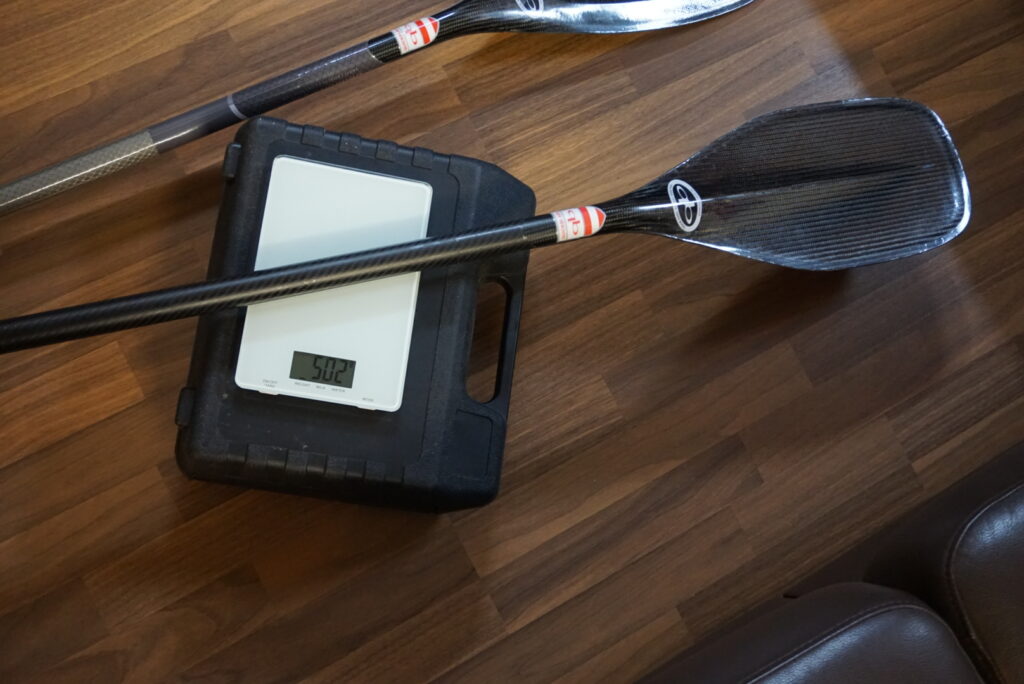
Recently QB seemed to do a little Update on their fabulous Diamond Elite Shaft and maybe even to the Blade Edges to get the weight down a little bit. My Trifecta 96 cut to 195cm with round tapered shaft as well as the UV88 cut to 197cm are just a tad under 500g.

I didn’t have the opportunity to test all the different shaft and Blade options that Starboard has to offer in their LIMA 2021 Lineup. I was a bit curious about naming a 87,5sq inch Blade an XL Blade. With an aggressive deep concave and a wide Blade tip this paddle caught my attention. I ordered the XL Lima 2021 with the round S35 shaft.

The weight Starboard is publishing on their site was exactly what I weighed in for the whole paddle at its maximum length. Cut down to 194cm it weighs 384g.

First test was quite promising as the blade is easy on the catch and provides a lot of grip while the shaft flexes more than I’m used to. It’s still very efficient and way easier on my shoulders when performing some intervals.

At the moment I try to get a clean exit, as the Lima tends to stick definitely more than the Trifecta which is my go to paddle when not focusing too much on a perfect technique.

The low weight is just amazing and I’ll do some tests to see if that flex leads to losses compared to the Quickblade opponents.

Stay tuned, there’s more to come 😉

Starboard Sprint (2021)

Starboard Sprint 2021 Header

Now that I’ve paddled the Fanatic Strike for almost a year and the decision was made to choose “safer” boards from race to race, I had to look for something new.

During the time trials in the first half of the year, the Strike turned out to be the fastest board. Nevertheless, I did not get warm with the Strike, especially during more leisurely training rides, because it seemed impossible to me to find a position where a efficient waterline was the result.

After a first test session at lake Neusiedlersee I was really impressed about the Starboard Sprints ability to punch upwind while providing lots of secondary stability when struggling to keep the balance. But it didn’t feel so comfortable that I would start a race right away.

Challenge is good, feeling comfortable is better

I didn’t want to make the same mistake as with the Strike and this time I wanted a board that felt really good and comfortable for the first few meters. Since the Sprint 2021 21,5″ was a bit more nervous than the Strike, I decided to order the Sprint in a size larger.

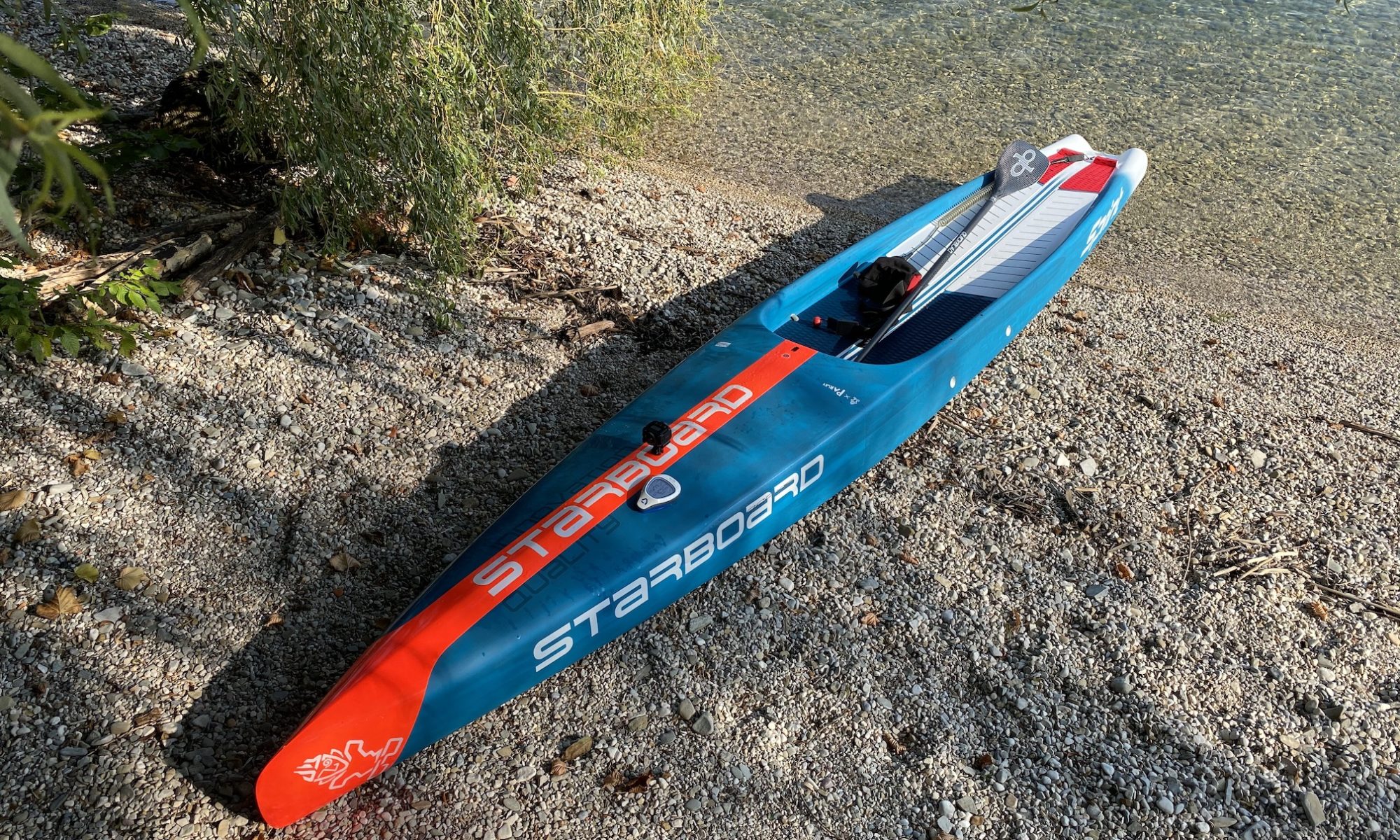
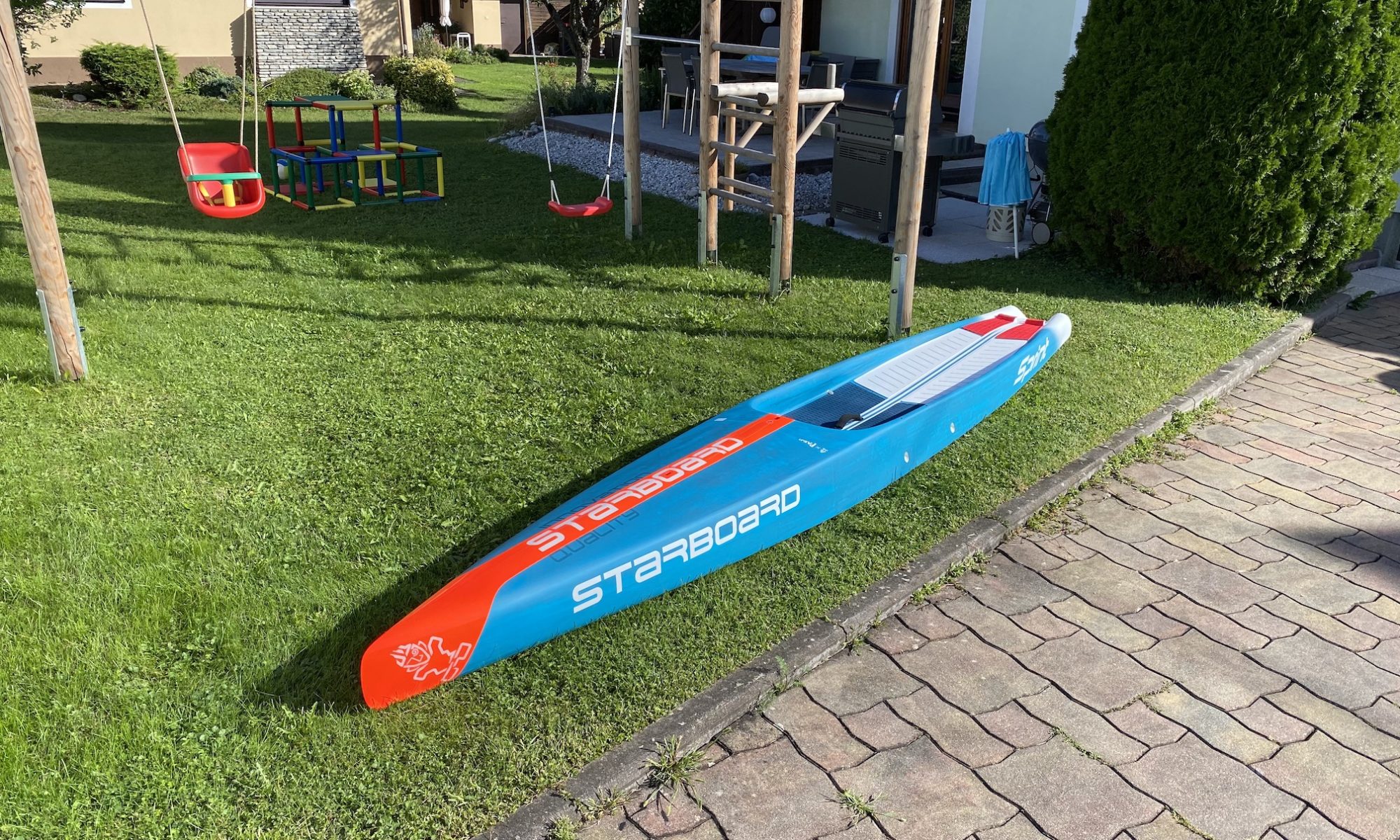
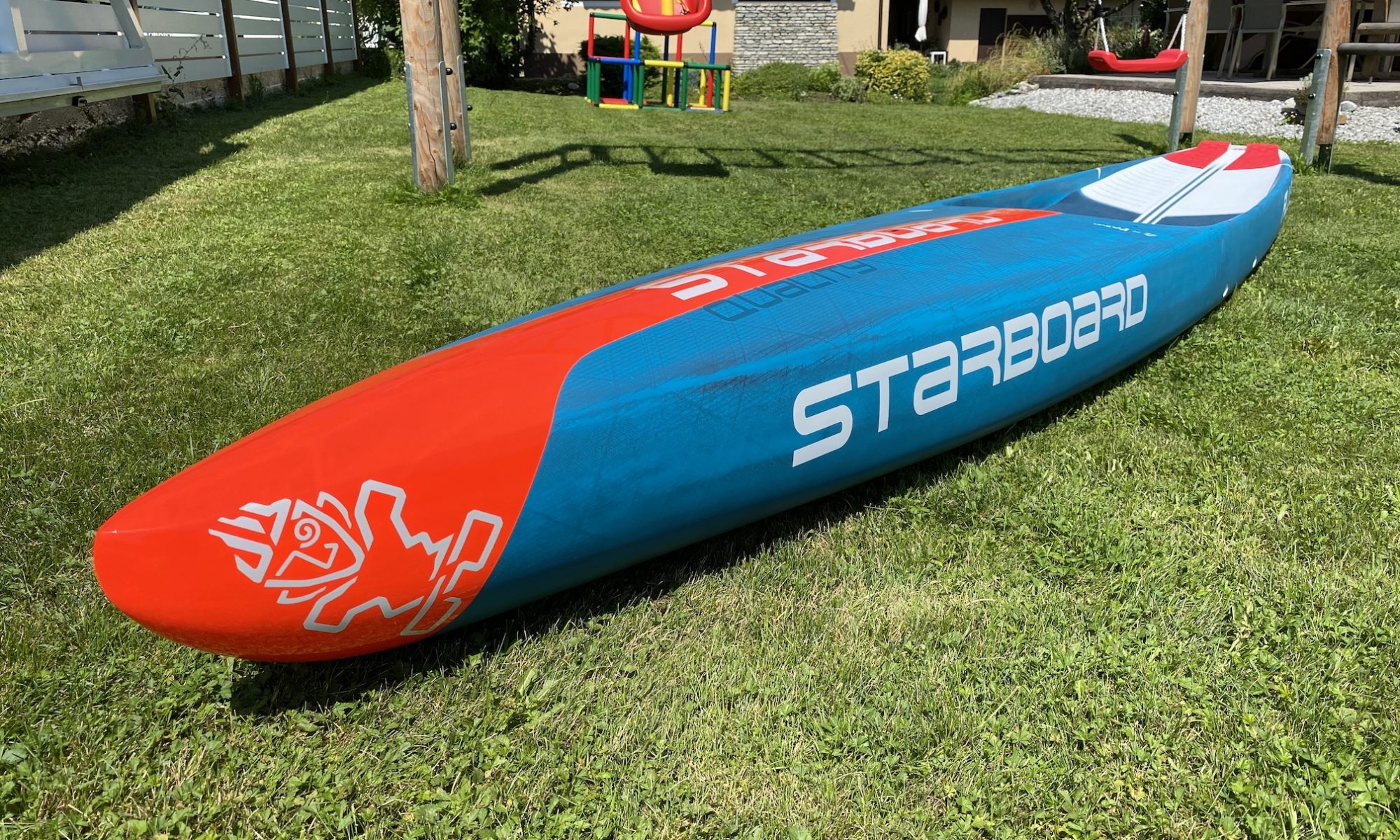
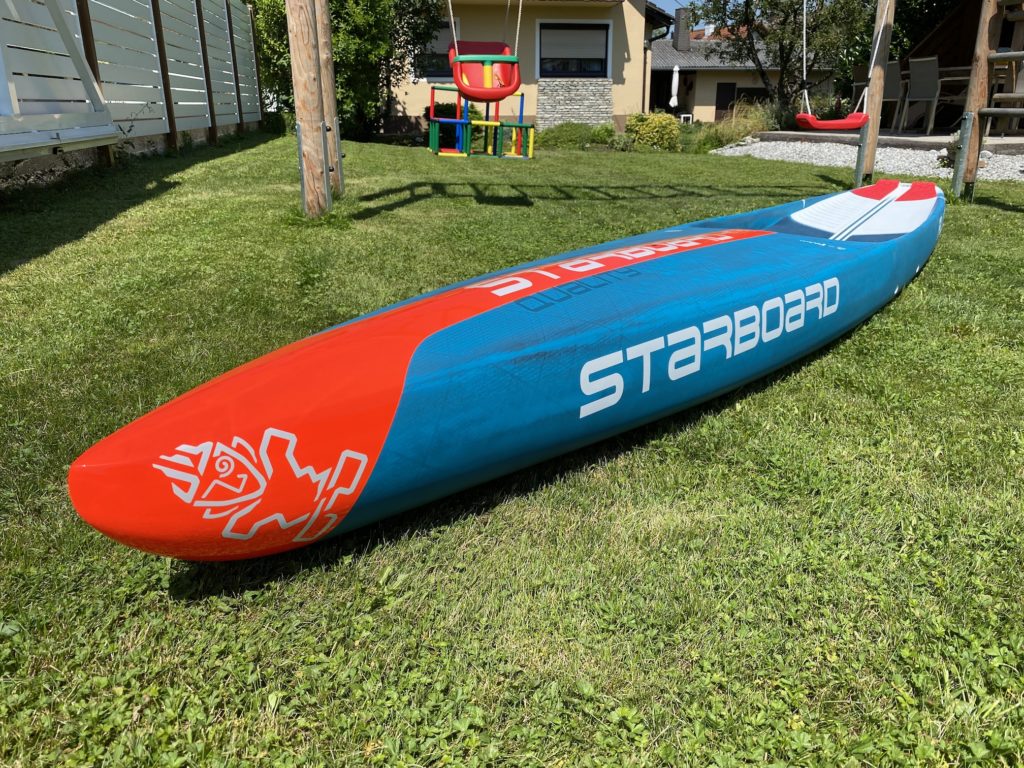
Starboard Sprint 2021 14×23,5 perfect size for heavier (85kg+) paddlers …

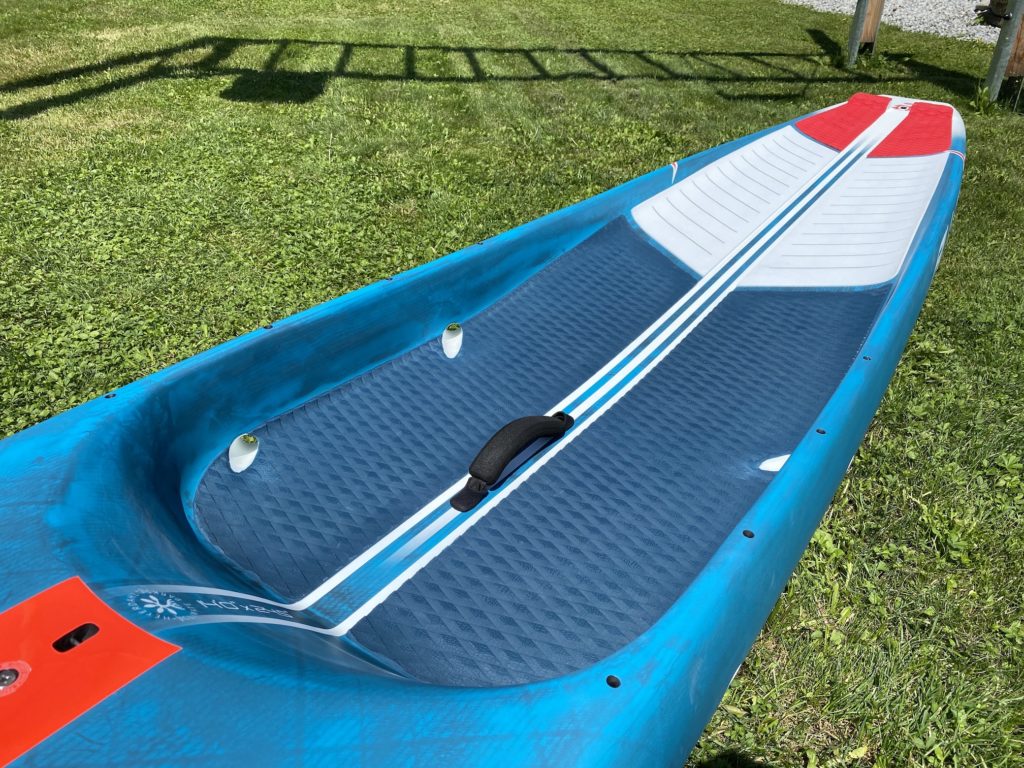
The standing area is greatly widened due to the dugout rails and provides a lot of room for proper foot placement.

Searching for challenge? Try the Wuux Race Sup in 19″ width 😉

On my first trip with the sprint, I was able to significantly reduce my best time at my home spot.

If this time it goes the same as in the past, the times on the home track should also be realizable in the race:

9,1km/h in Q3/2020

So it seems like feeling comfortable, coupled with an efficent board design, looks promising.

Subtle changes,… refining what worked well in the past

The Sprint and the Allstar 2021 not only combine the updated look, but also the updated carbon sandwich construction ensures load-optimized improvements.

Except for the fact that both models are now dugout designs, this where similarities come to an end.

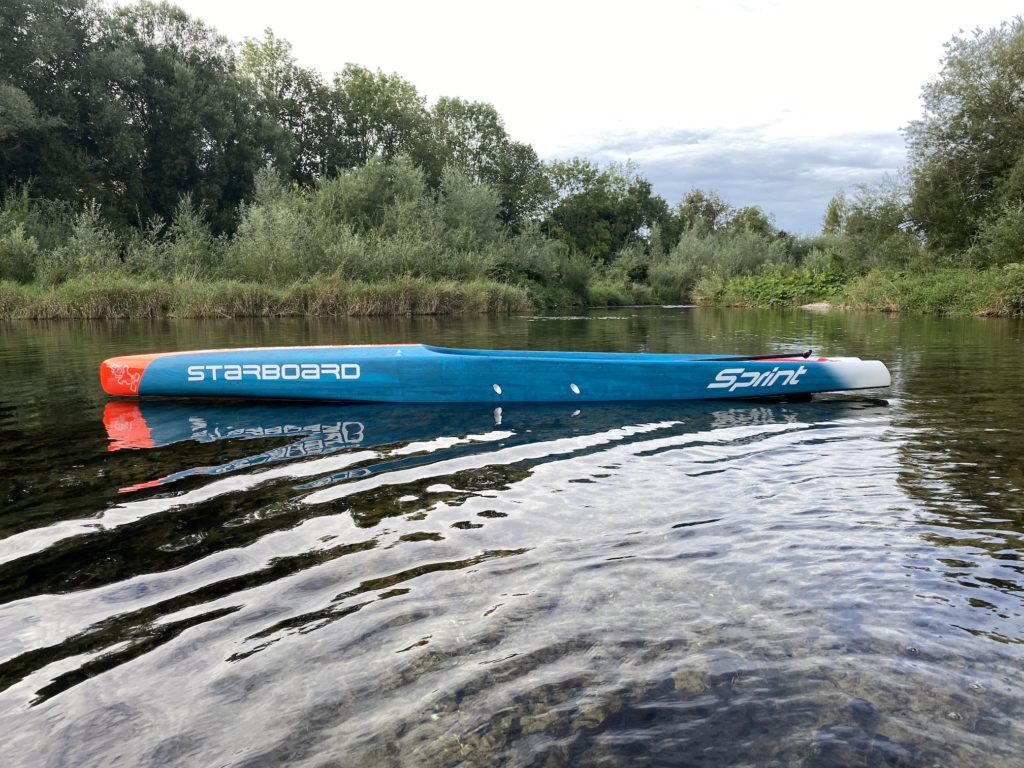
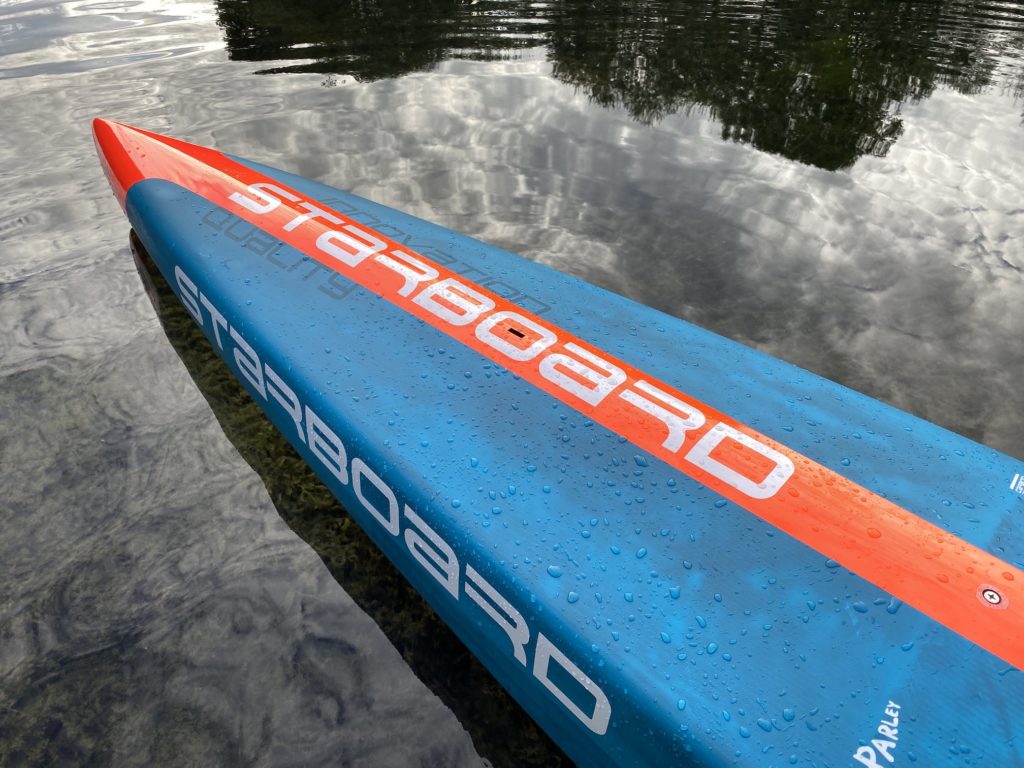
It is immediately noticeable that the Sprint has very high, slightly sloping sidewalls. These ensure large safety reserves if the initial stability is overused. The new nose design sheds water quite efficiently without wrapping over the entire nose, when hitting bumps.

Especially in upwind conditions, I really like the very calm handling of this board… It’s not as playful as the Allstar, but it’s very effective at maintaining glide and the sharp nose makes it possible to stay on course. When facing bigger bumps the high sidewalls tend to push you back when loosing stability, although I have to say that I do have to work more when having sidewaves. The Allstar had a looser feeling and also the RS was easier to deal with sidewaves.

On my home spot, I mostly have to deal with eddies and high currents, and this doesn’t push the nose around as much as the Strike, but it’s definitely more challenging than the Allstar. Same scenario when drafting, but because of the high volume, you don’t have to change your foot position as often as with the Strike.

The standing tray seems to be about 2-3 cm higher than the Allstar’s (2021). This prevents water from entering that often and helps keep the ride dry.

Shallower bottom concave, wide tail…

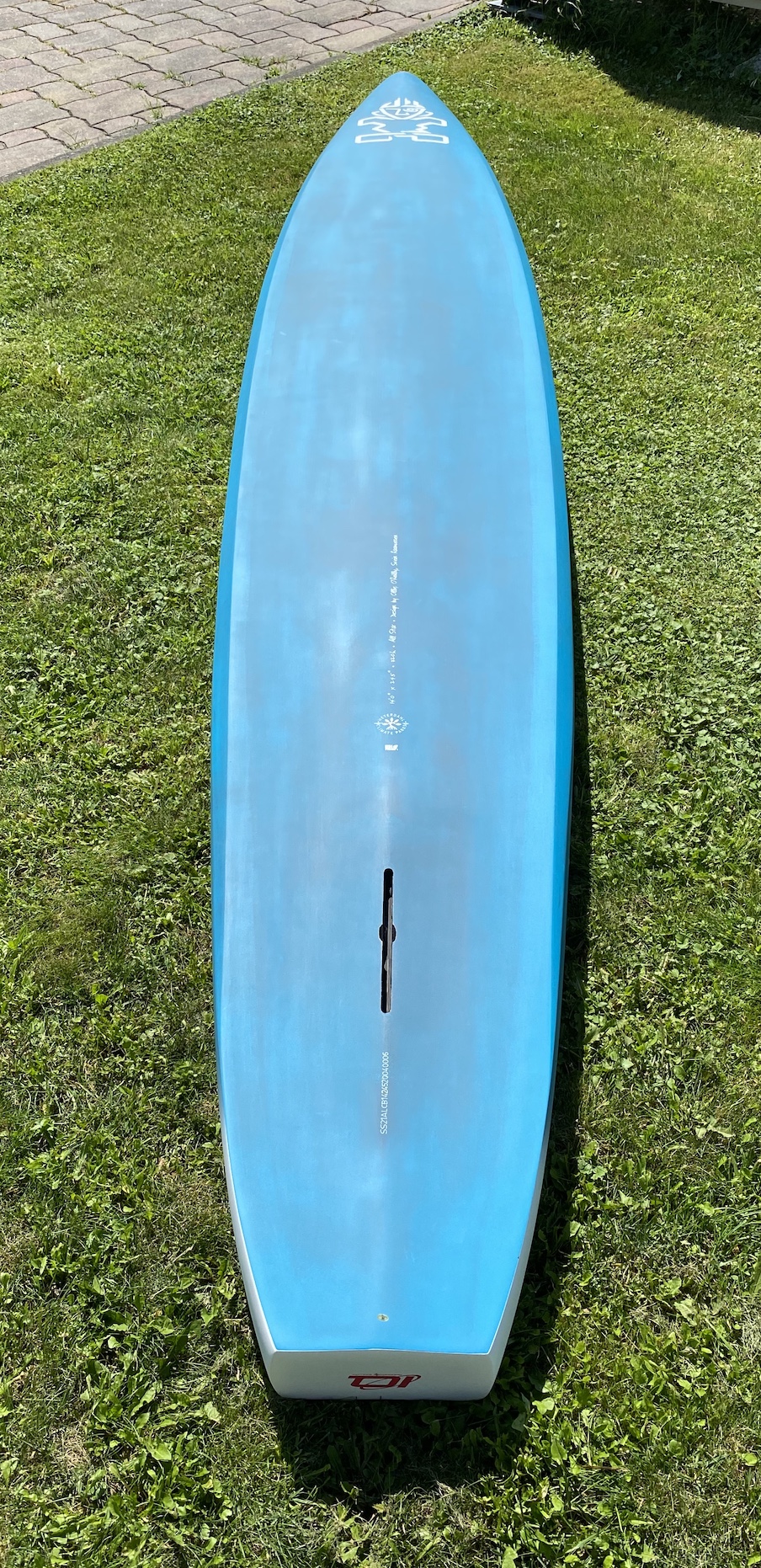
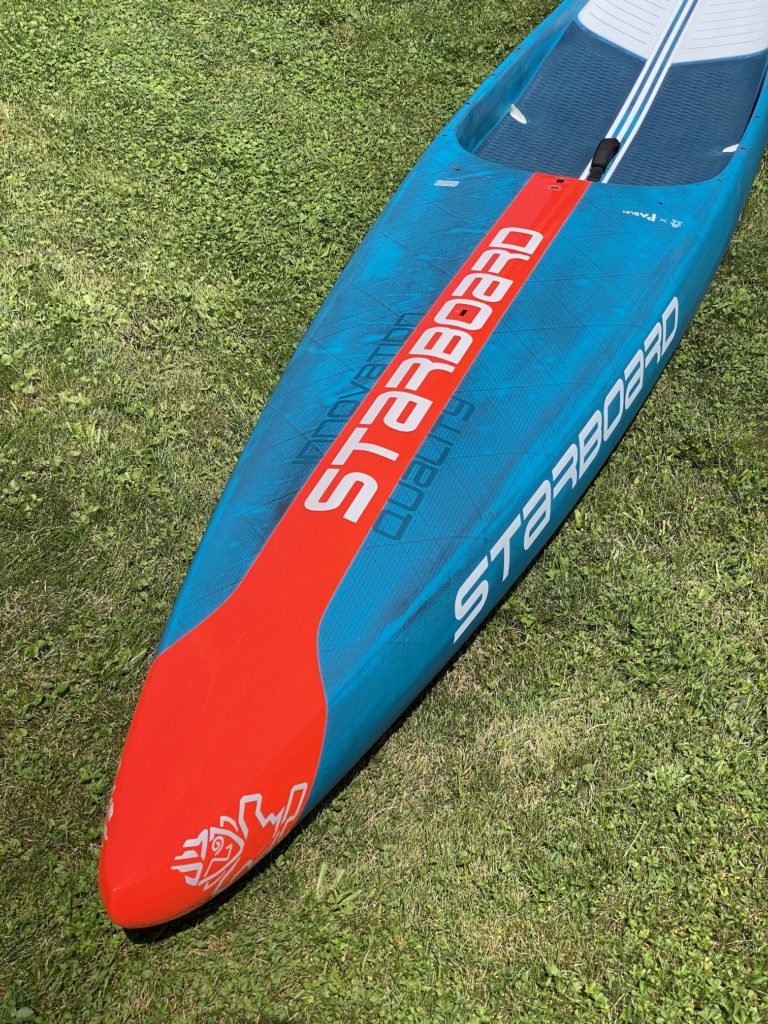
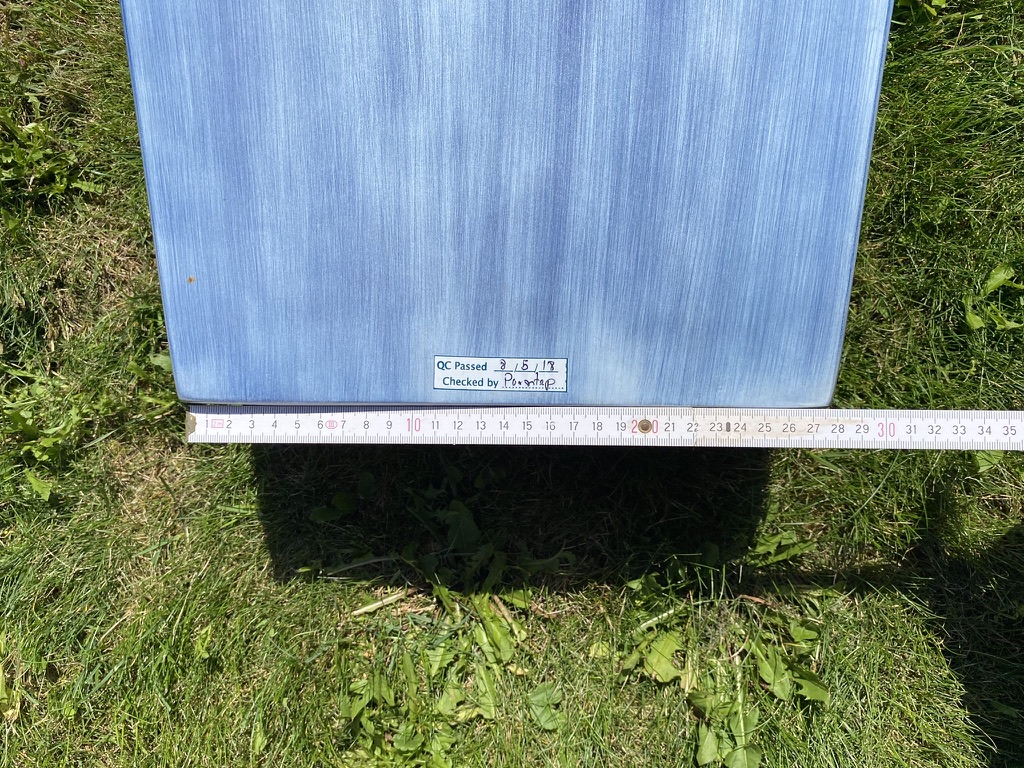
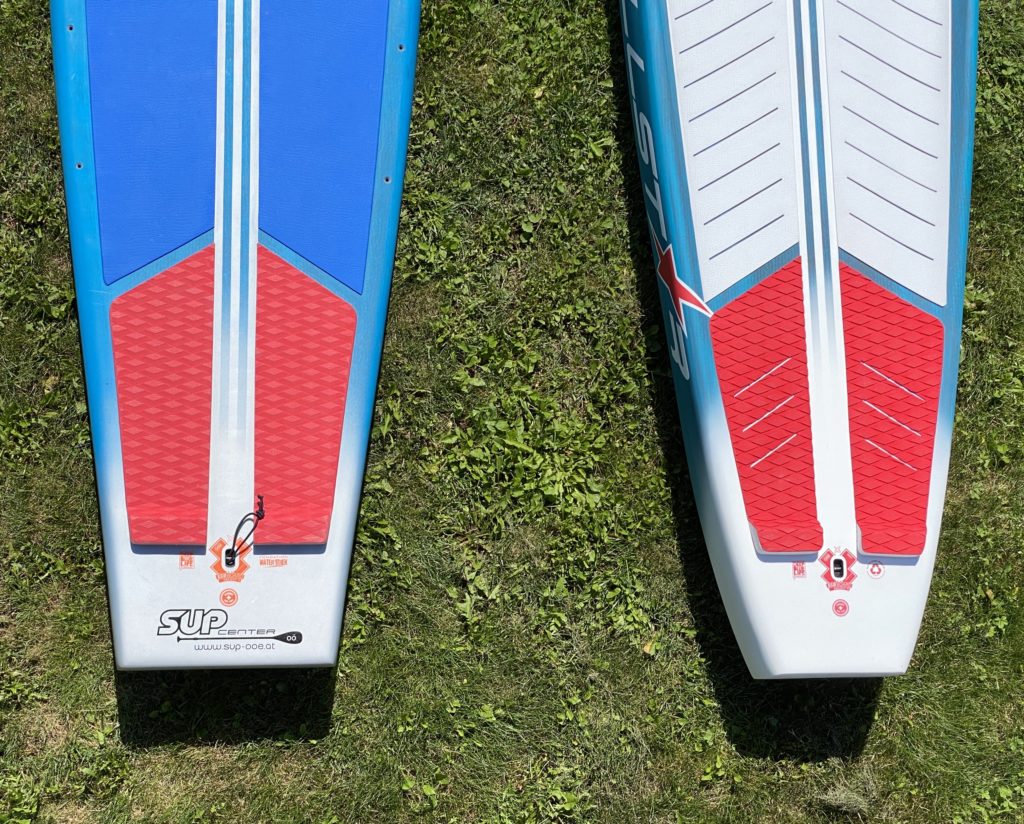
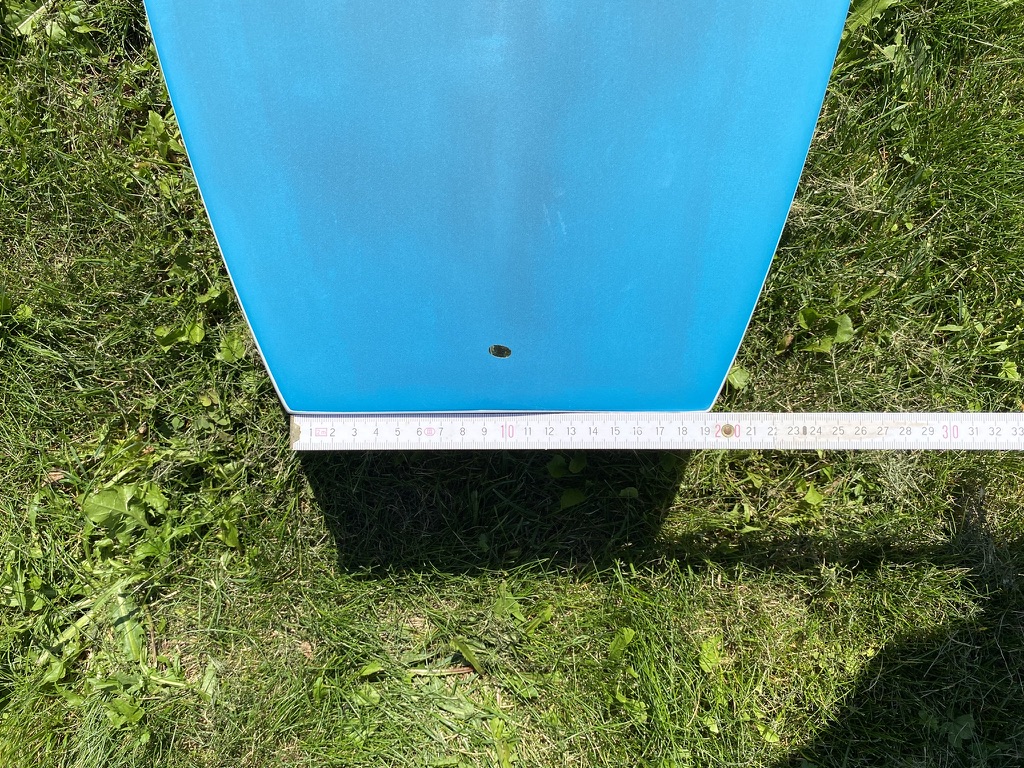
Allstar 2019 24,5 with deep center concave compared to the shallower concave of the Sprint 2021 23,5

If you’ve read my previous reviews, you know that I’m basically a big fan of strong concaves in the underwater hull. Why? It serves for stability and lift.

In the 2021 Model, Starboard went for a shallower concave to reduce wetted surface area and further increase speed. I can safely say that the sprint is clearly faster than the Allstar 2019 & 2021 (24,5) in flatwater conditions.

Do you give up a lot of stability for those 10-14 seconds per kilometer?

The answer is no, but you should be aware that the secondary stability sets in very evenly and leaves a lot of room until you really have to counteract it. Overall I’d say the Sprint is relatively easy to paddle for it’s width, but both the Allstar and SIC RS might be a little bit easier to handle.

Due to the high sidewalls it’s possible to lean it to extreme angles.

I am currently noticing that I like to take the Sprint in whatever conditions and never have the feeling of being better off on another board.

Currently I’m trying to find out what fin setup I like most, but by now I feel most comfortable with the stock Race Ultra 2.0.

The Sprint is a great board when heavier riders (85 – 100kg) are searching for a flatwater orientated board that’s not shy of hitting some bumps. It provides good speed without challenging its rider.

Soon I’ll try to give you some more impressions and I’ll do a comparison with the LightCorp Signature 2.0 24,75!

Allstar 2019 vs 2021

How much difference does the material make in a race?

The Austrian State Championships in LongDistance took place on September 6th, 2020.

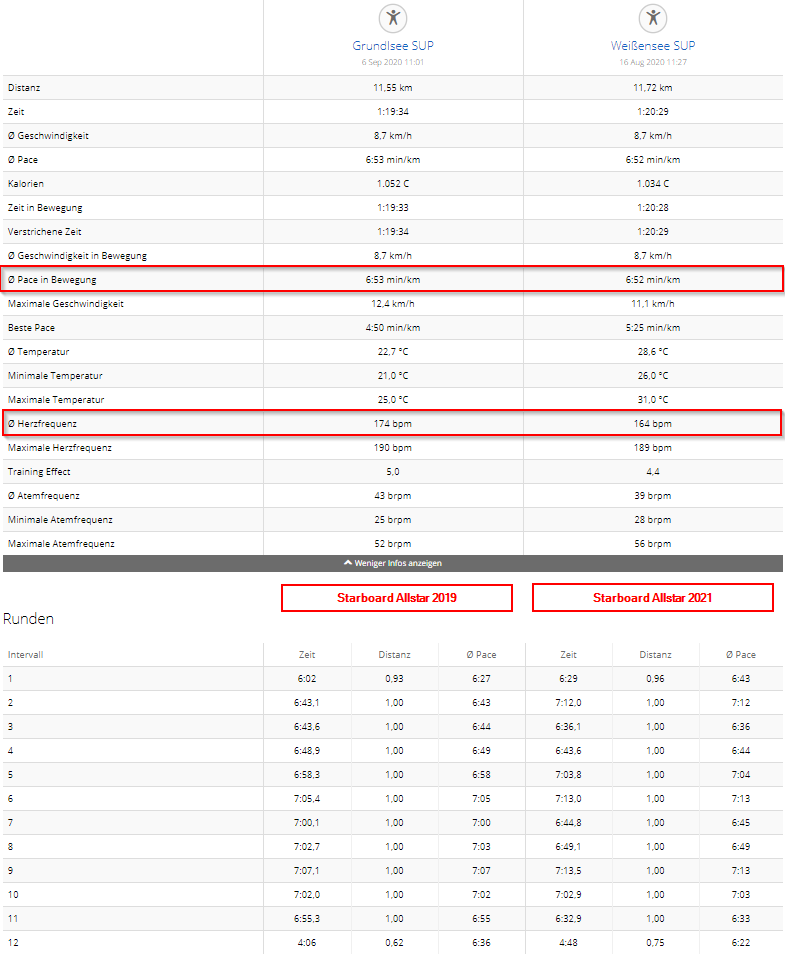
The conditions are never comparable 1: 1 and the daily form will also vary. But if we compare the statistics of the Weissensee Classics race with those of the Grundlsee, one thing is extremely noticeable when looking at my stats.

AVERGAGE HR

The average pace was almost identical in both races and the conditions were also very comparable. If you also consider the dilemma at the Weissensee with the lack of drinking water supply, the significantly higher average heart rate is particularly noticeable.

But how did it feel?

Keeping in mind, that it was way colder at lake Grundlsee and camelbak served me well, I have to state that it was way harder to keep my desired pace! The Velocitek Makai is such a great piece of gear to react instanttanously, when paddling technique starts to suffer from getting tired. But the downside is, that you’re getting pushed to try even harder even when muscle fattigue kicks in. Everything seemed to go a lot easier with the new 2021 Allstar, and the glide of the 2019 Allstar is way worse than with its successor. I had no reserves for short sprints or to significantly increase the pace for a longer period of time.

Summarized

The 2019 Allstar is perfect for challenging conditions but it’s definitely not the best flatwater board. The target group for the 2021 model is the same, but faster by quite some margin in flatwater conditions. I’m totally happy with my results as these are showing 1:1 what I’m able to do in my training sessions, but there’s a lot of room for improvements 😉

Second in the first heat, right behind Move Mike on his 2020 SIC RS 14×21,5

In the 200m sprint race, I couldn’t find any significant differences and claim that the new board can’t be moved any faster. Perhaps that was one of the reasons to get an excellent fourth place.

If you want to have a deep dive into my stats:

Coming up next: Starboard Sprint 2021

Since the Allstar 2021 is making some impressive changes and has served me well in my last race, I was still wondering which board I should ride for the next racing season.

In austria most races take place at lakes where wind and swell don’t call for an Allstar and when doing flatwater races there’s still the Starboard Sprint that got my attention.

As many of you’ll know I also own a Fanatic Strike I like to use for training sessions. For Races I’m still struggling to feel really comfortable with it as my feet do feel a bit cramped in and let’s face it… I’m too heavy for the Strike 14×21,5. It’s not possible to find the right standing position that would let the Nose slightly pierce the water while not sinking the tail too much. Last year I decided to go for the Strike because I was able to keep the balance while struggling with the Starboard Sprint 2020 14×20,75″.
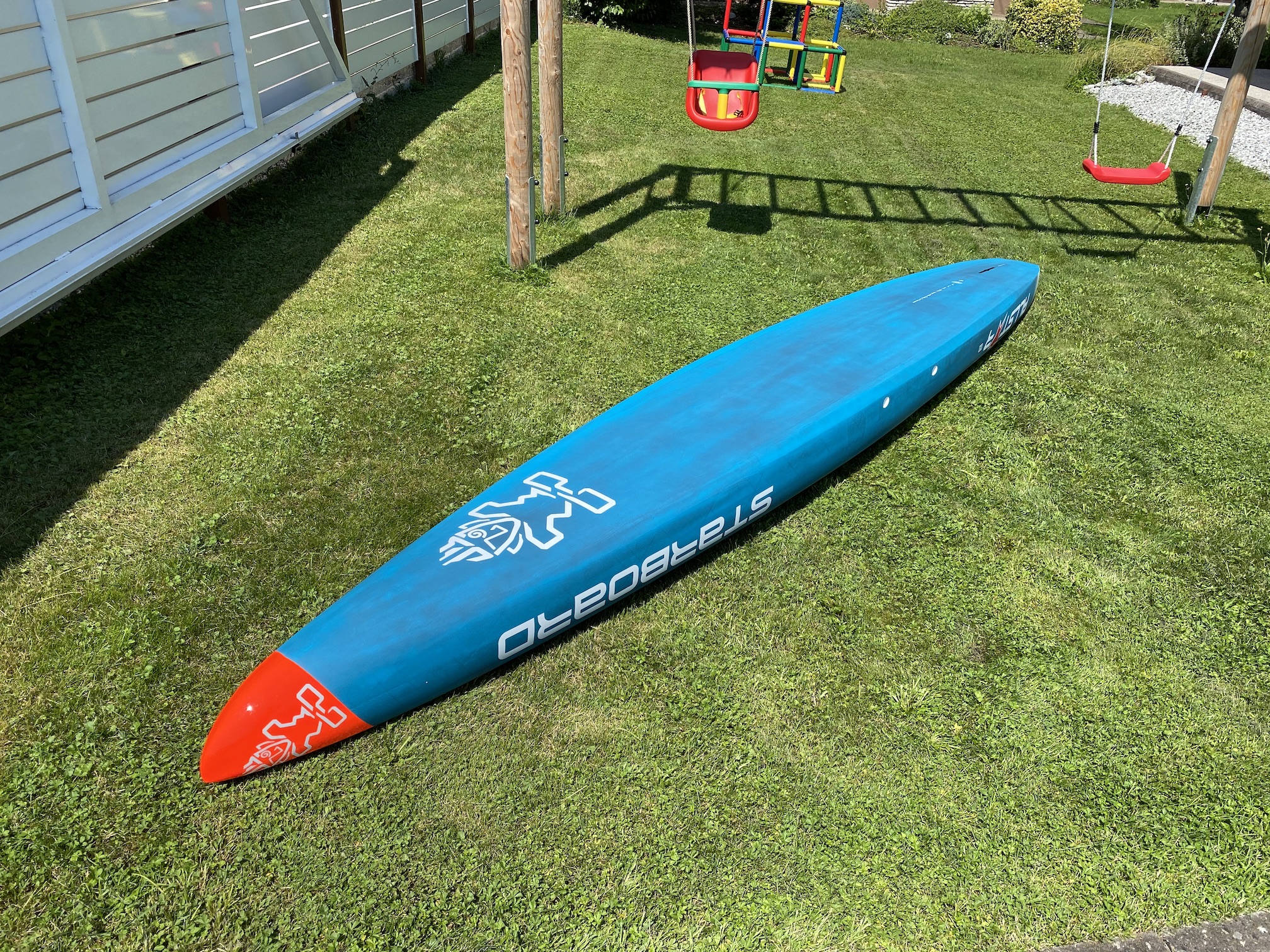
While I had the opportunity to test the Allstar 2021 , Move Mike had a Sprint 2021 14×21,5 for testing purpose. At 2-3Bft we were able to take both boards for a short lap and while I was struggling a little with balancing, there was this tremendous secondary stability and lots of volume that served me well in headwind conditions. Downwind it was way more manageable than I’d thought… so maybe this would be the right choice for me?

Last year I gained some experience, paddling the Strike alongside the RS and the Allstar.

The Strike was too narrow for my paddling skills and the waterline seemed to be always a bit compromised due to my bodyweight. With the Sprint I didn’t have a feeling that the waterline was compromised, but as I didn’t felt as comfortable as like with the Allstar I decided to go for the 23,5″ Version.

At the very first ride I did some kilometers getting used to it and decided to do a short speed test at my home track.

6:38 new record at the first attempt

I tore my left finger joint capsule in a training accident four days earlier, so I had to focus paddling on the right side changing paddling side was way slower than normal.

All this didn’t ruin a new track record and I do have a feeling that there is way more in it. It was the right decision to choose a board that I feel comfortable on from the start.

I will do a more in depth review after I’m completely fine again and currently I’m trying to learn a lot about hydrostatics to get a better understanding why different board designs work for me and some don’t . What I can tell by now is that it’s the easiest board I know for doing step back turns and the waterline seems to fit perfectly for my weight. The standing area is exactly as wide as on my Allstar 2019 which is great to feel comfortable and free in my foot placement.

Compared to my other boards it’s nearly one kg heavier but it doesn’t seem to compromise it’s ability to keep a very fast pace. As always … if you want me to pay special attention to certain traits, please let me know.

Big Block , lots of volume and never ending sidewalls 😉

Starboard Allstar (2021)

Most of the time we only see slight changes in products that have been popular for several years. It’s the same with our most beloved sports discipline , as physics will always lead to compromising other strengths of proper working boarddesigns/constructions.

Last years Starboard Allstar 2020 went away from their deep monoconcave bottom design and switched to a round vee with slight double concaves to help provide enough stability. As some testers stated, the new design leads to a better glide but made the board a lot tippier than the previous models. The 2019 Model has a user friendly design, which works not only for the higher skilled paddlers and that’s not the only reason I bought it myself 😉

I was really excited what Starboard will show for the 2021 Allstar. Are they staying with the 2020 bottom design? Are the strengths of this allwater racer stay put? Is there something totally new?

Let’s have a look at this beauty:

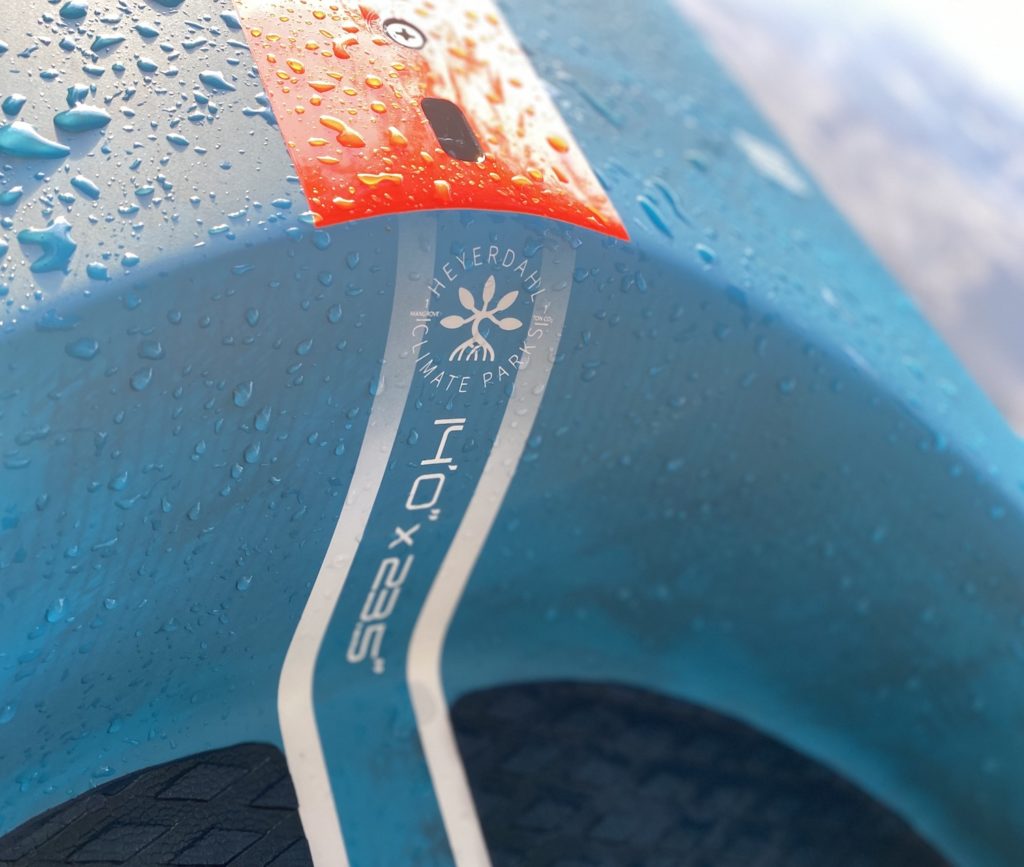
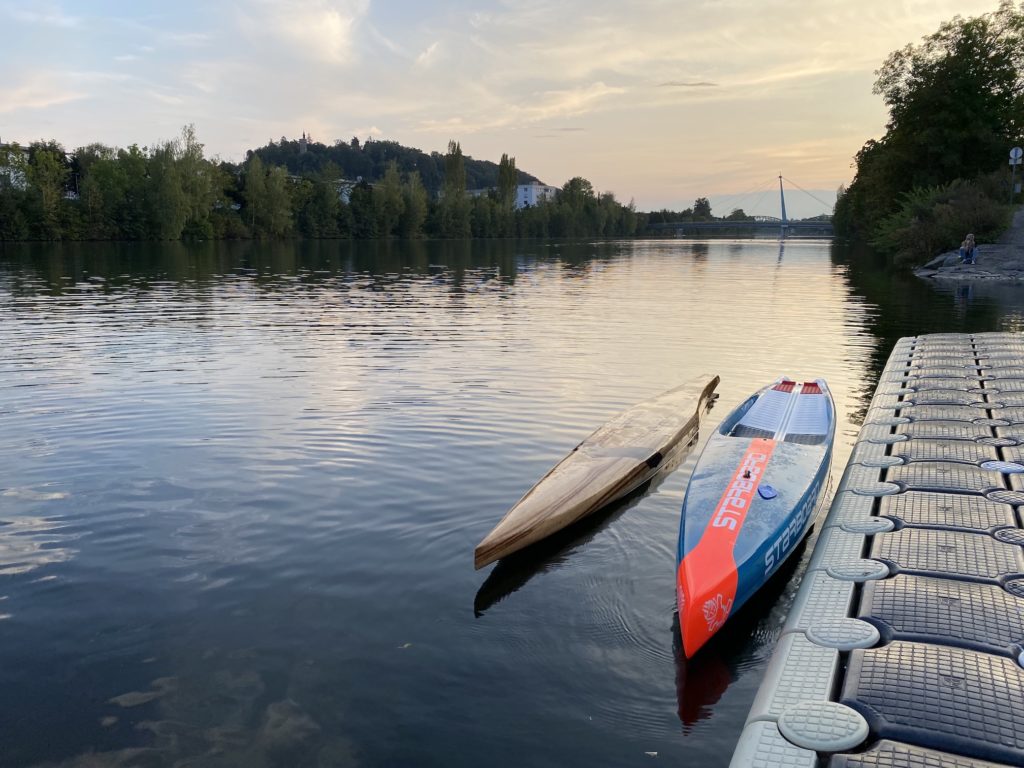
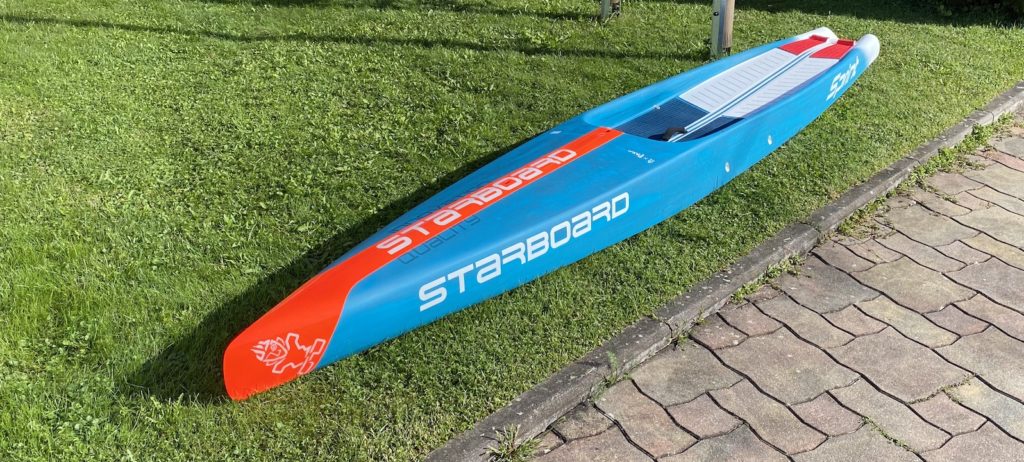
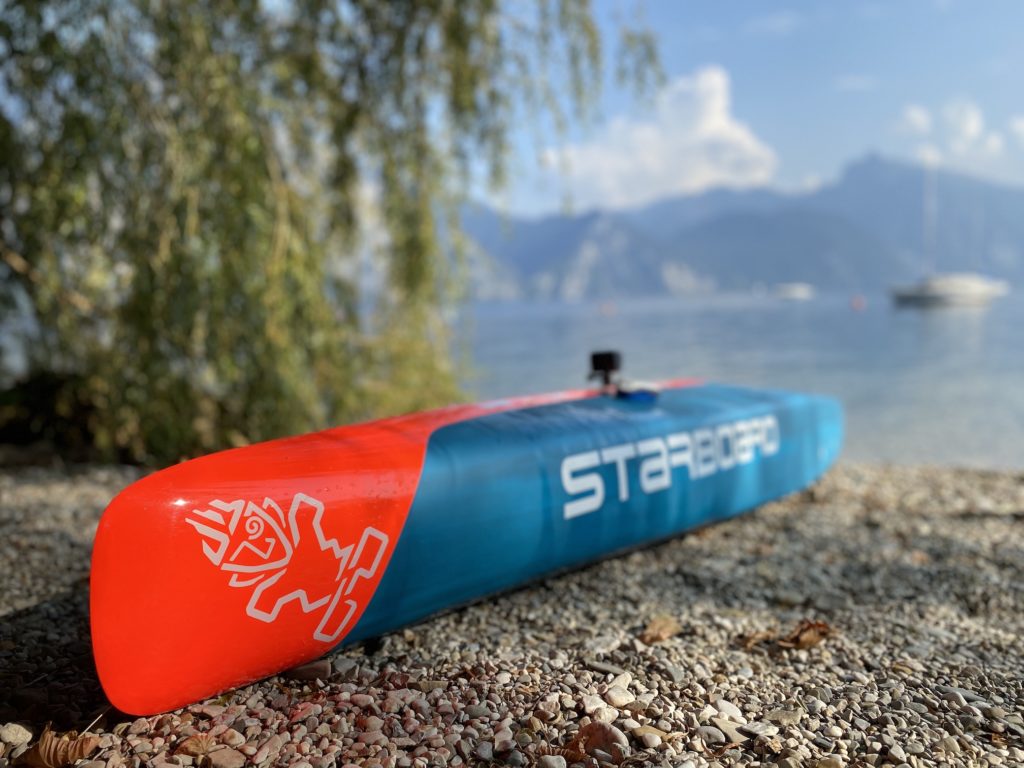
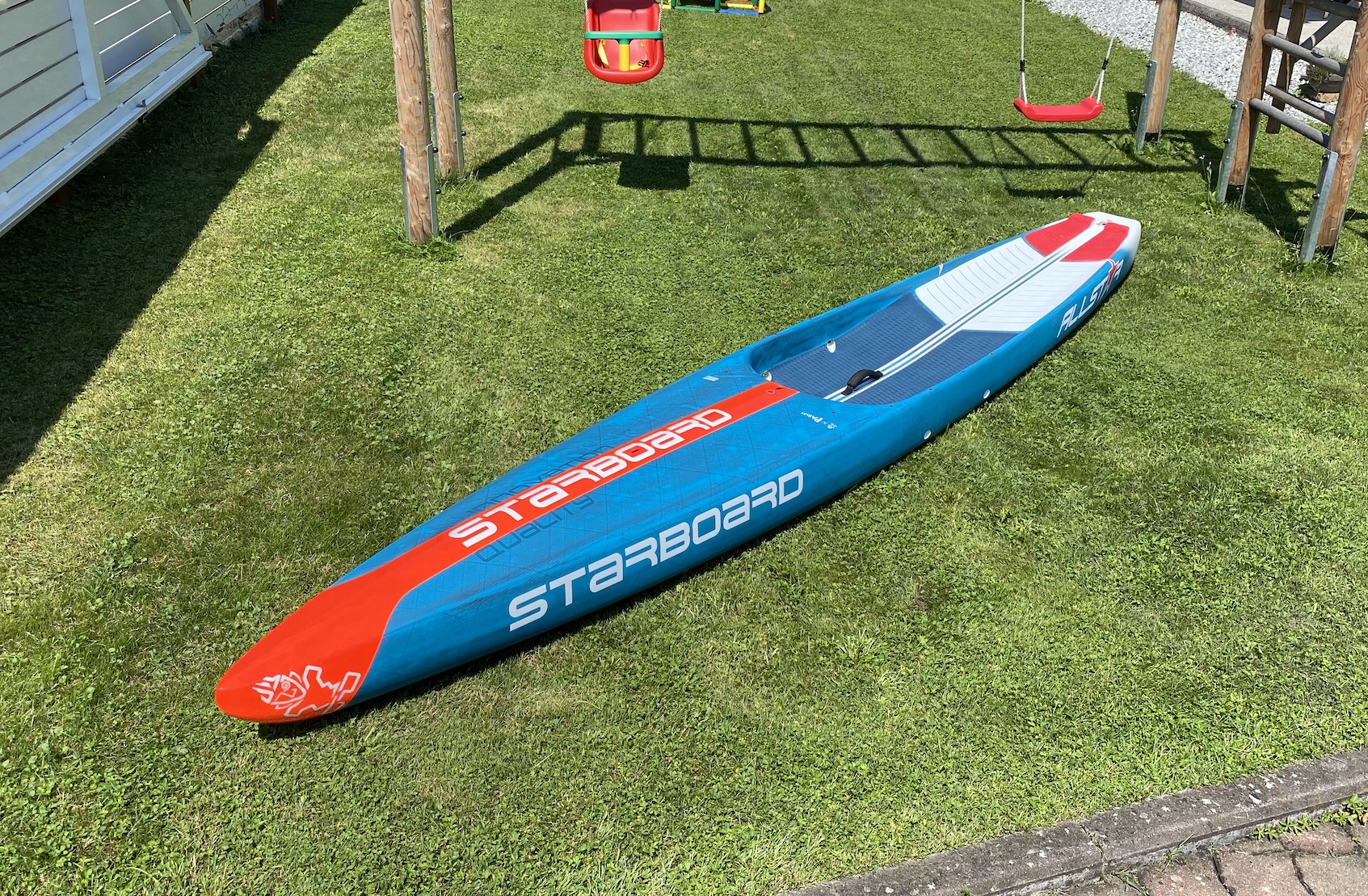
Popping colors, darker blue tint, dugout design…

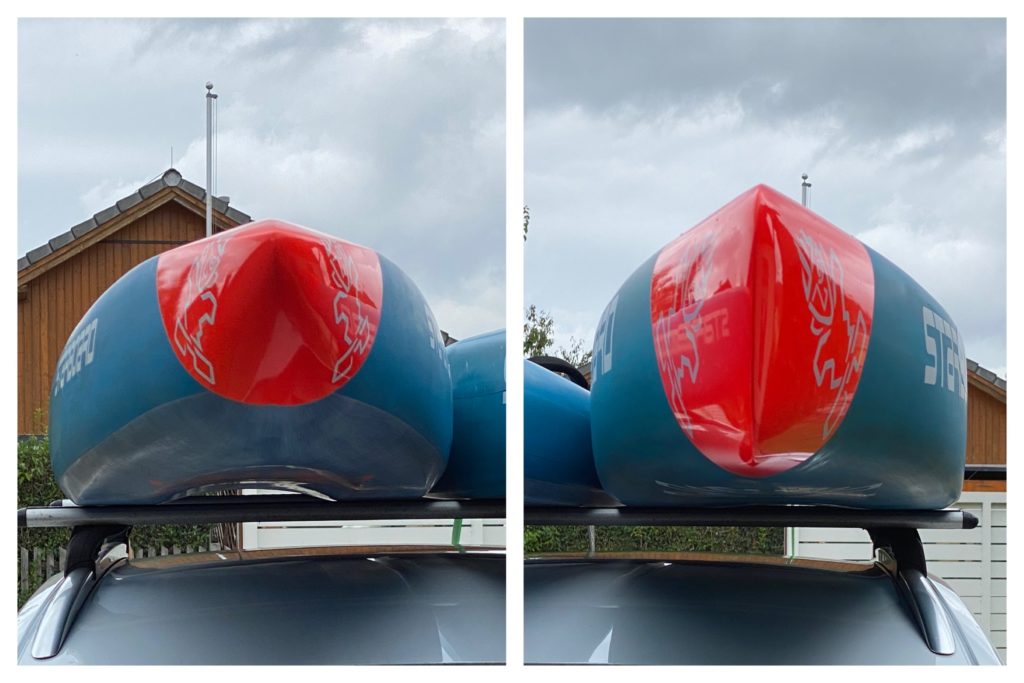
It’s a complete redesign… here we have a dugout style board, a new carbon sandwich construction, and a way narrower tail compared to the forerunner models.

Low center of gravity with the new dugout design

I can happily tell the valued properties and features, meet the requirements of the premier class, like the pigmented paint, GoPro mount, a nice and redesigned grippy deckpad, multiple handle positions and excellent workmanship.

The bottom design is mostly comparable to the 2020 design with its big belly in the middle and those double concaves, but this time… combining it with a narrower tail (-9cm) and the deep cockpit it’s as easy to paddle as the old deep concave in the well known predecessors 2019 and older.

First Impressions

I was really excited about putting it on water for the first time and I was asking myself how long it would take to get used to it. No jokes, I felt instantly felt comfortable and I’ve had zero issues focusing on paddling and putting power onto the blade.

I had a feeling I could easily cut my paddle down 3-5cm, as I’m standing exactly at water level. The drainage holes are working great when paddling, but as you’re going a little slower there’s always some water coming onto the standing area, when tilting the board left and right. Because of this, it may not be your first choice to do your winter training with. For sure there is a more reactive feeling due to the convex hull, but there is also a lot of stability due to the low standing area. Overall this sums up for a comfortable ride with lots of stability!
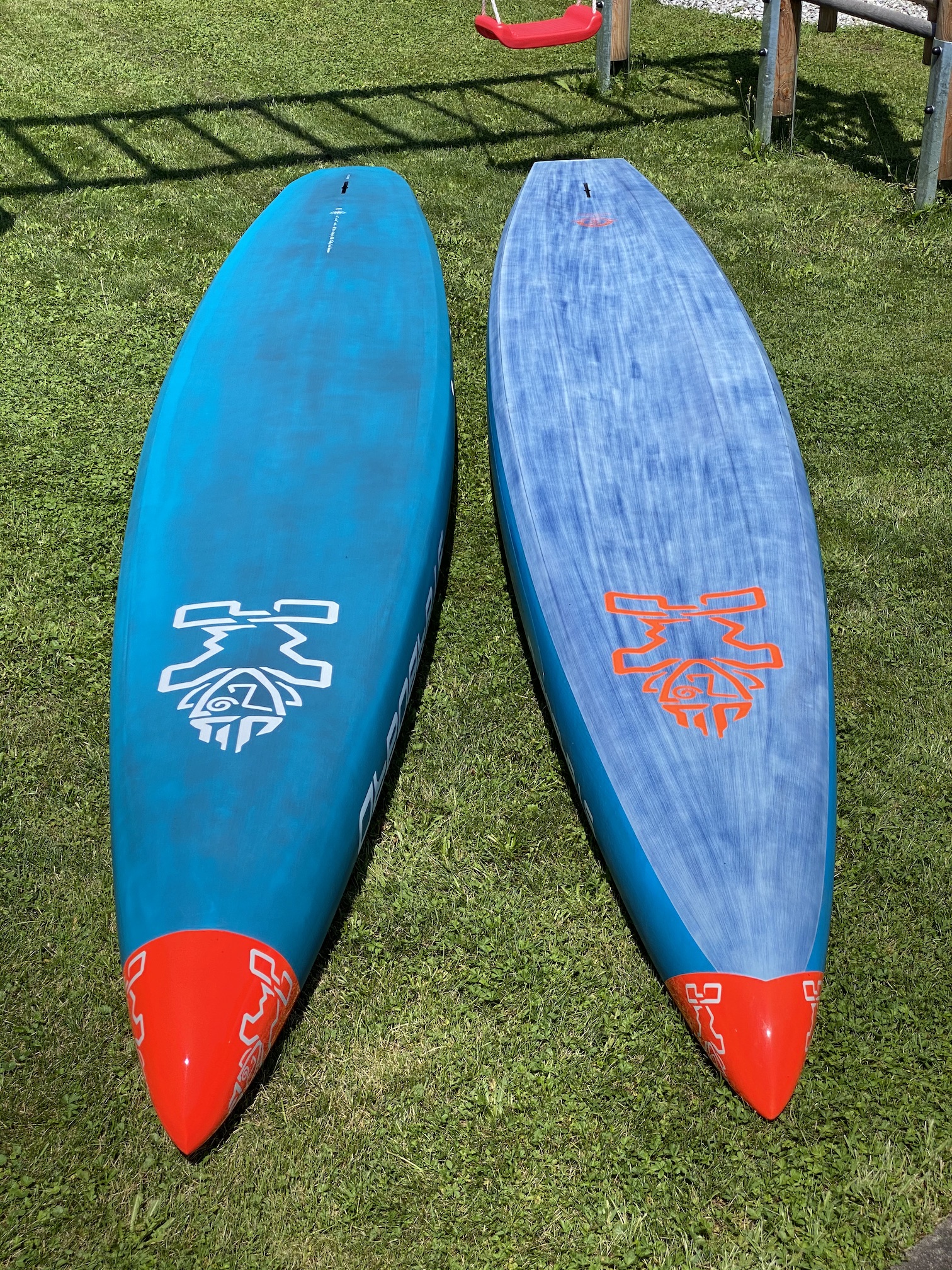
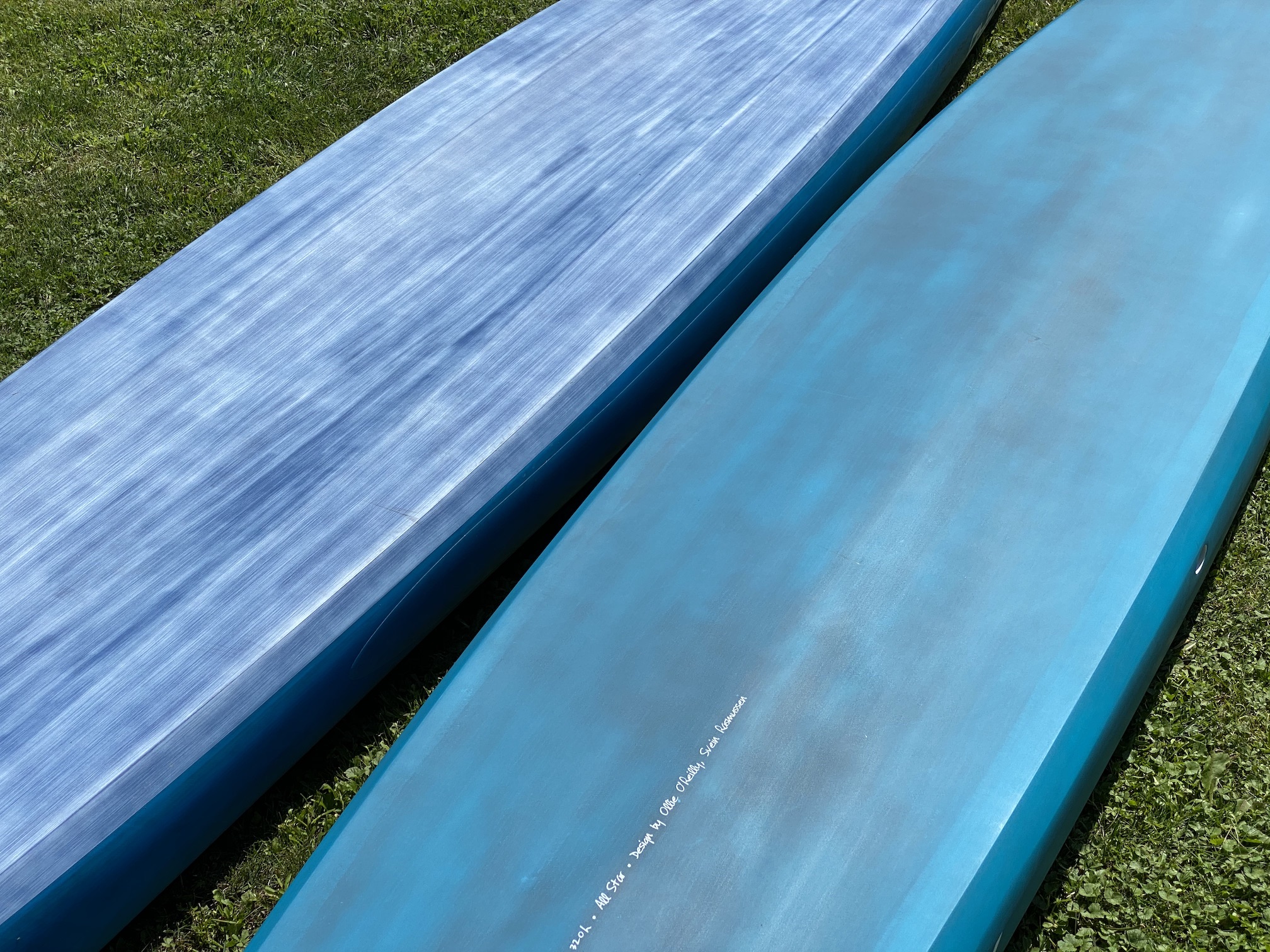
The nose seems to enter the water with a bit of splash like I’m used to with the 2019 Allstar. As I mentioned in the Starboard Allstar 2019 review, I’m a big fan of this nose shape. This design works great when drafting, entering swirls or hitting bigger bumps, I’m happy Starboard carried on with this great working design.

Tail … here the magic happens

The tail is way narrower than previous Allstar designs and when paddling with moderate power I could feel that it requires definitely less power to maintain a good traveling speed.

In my case I could manage to paddle my homespot time trial track with relatively low hr of 150bpm at a solid 8,5km/h, or 7:06/km at very high temperatures. When putting more power into the stroke I could reach an average speed of 9km/h which is exactly on par with my best time for the Fanatic Strike 21,5! The new bottom shape definitely has less drag, but I struggled to paddle straight compared to its 2019 predecessor. I can do 15 to 20 strokes per side with the 2019 model, but in the beginning I had to change every 10th stroke with the Allstar 2021 to get it straight, as it seems a little more difficult to steer with the rounded rails .

I did some testing with other paddlers which are more experienced than me and everyone was quite satisfied with the effortless glide the Allstar provides.

There’s really a lot to like with this board and I’ll need some more rides to compare them 1:1 with direct switching to give you a better idea how about the differences.

In terms of haptic and feeling I can tell that the 2021 Allstar is stiffer than its predecessor while not being rock hard as the Fanatic Strike 2019/2020. The restorative flex is less noticeable than before and feels just right for a paddler of my weight. Most importantly there’s no disturbing flex when pushing it whilst sprinting.

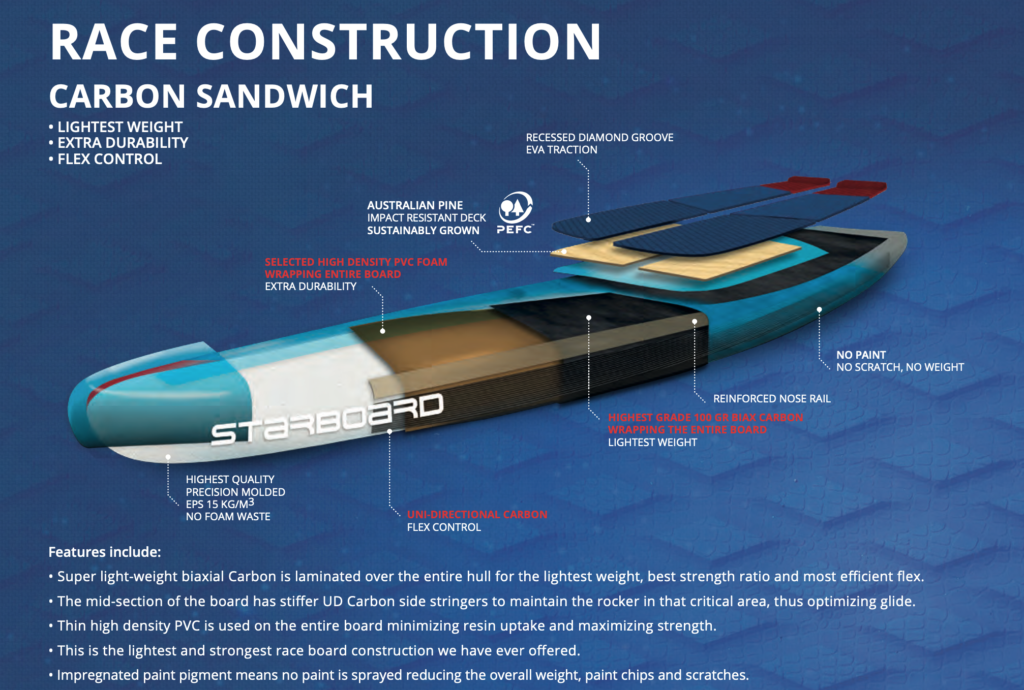
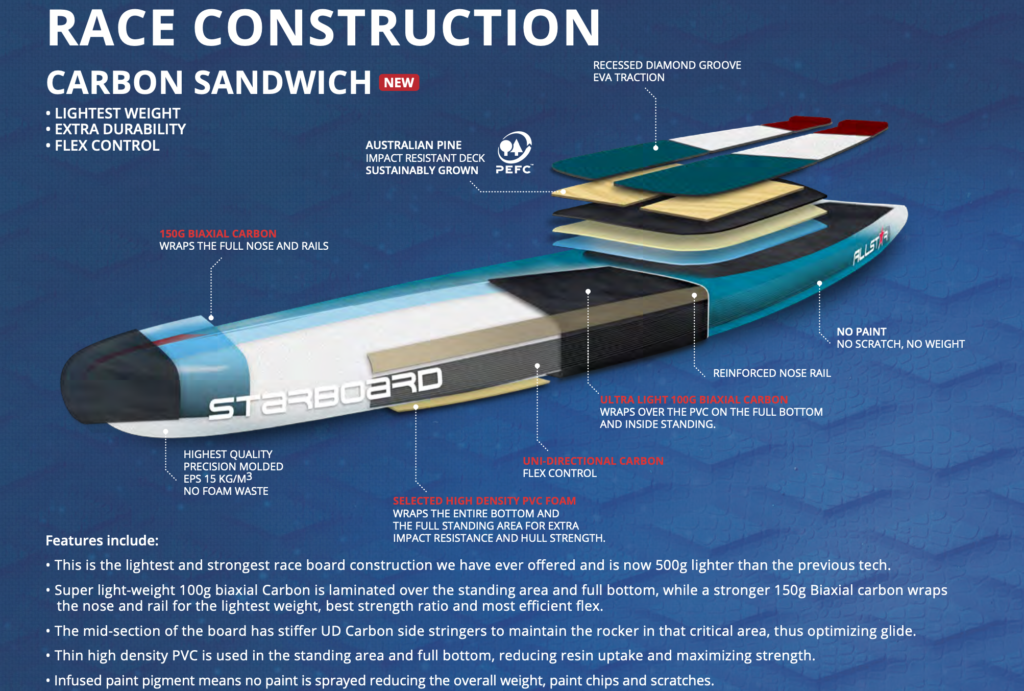
Here you find what starboard changed with their best carbon sandwich construction:

Some critical areas as the nose and the rails are benefitting from using stronger 150g/sqm biaxial carbon, but at the old construction compressive strength at the top of front area was noticeably better, maybe due to fact using 100g biax carbon and full pvc wrapping over the entire board. During a regular rece I don’t think this should make a difference as the vulnerable areas got beefed up and other areas show a lighter construction to save some weight.

How it rides in different conditions…

Tracking, turning, stability, cruising and of course racing will be featured after this weekend as I’ll have the opportunity to try this board at the Weissensee Classics Race 🙂

16.08.2020 and here we go…

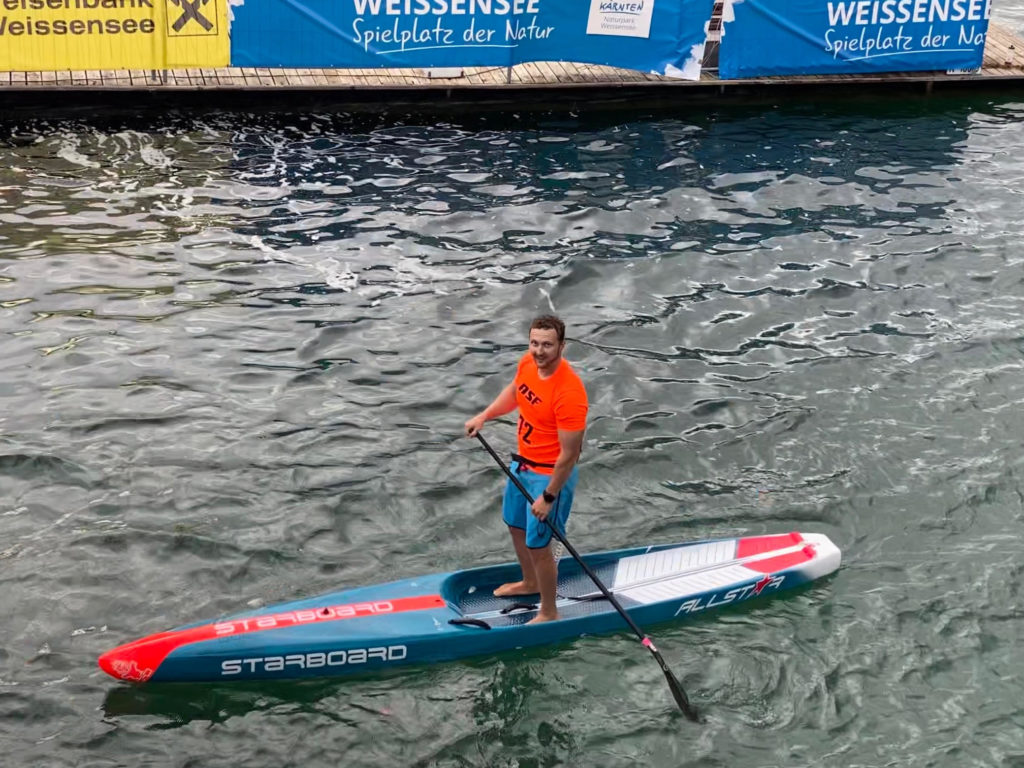
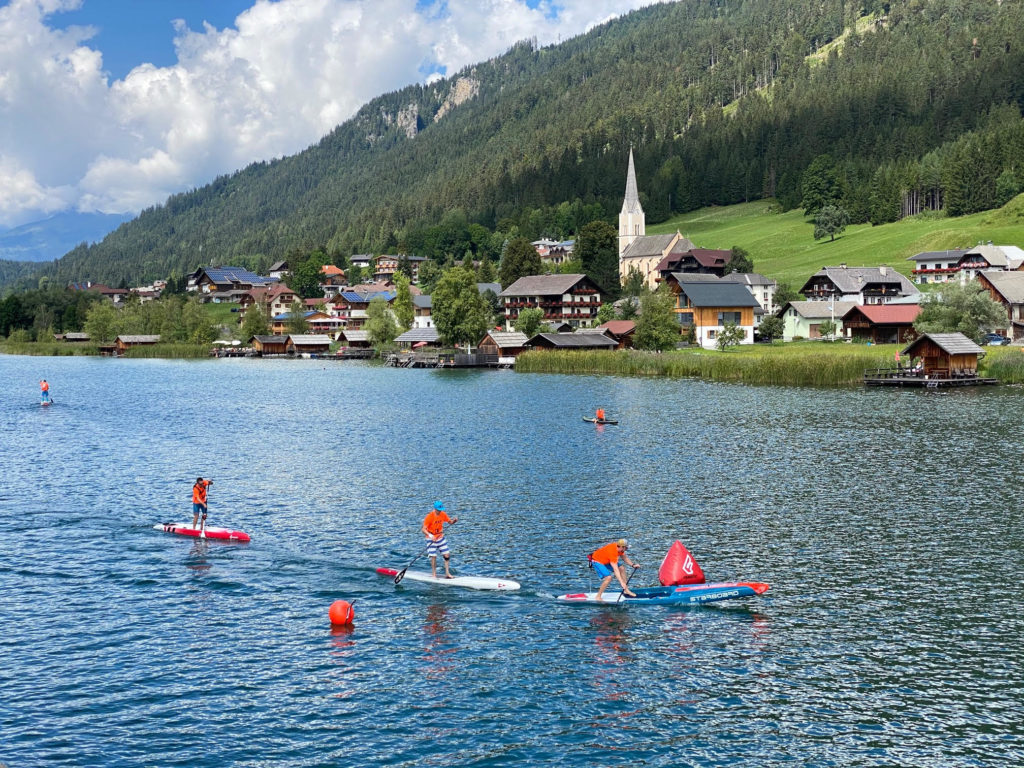
Weissensee Classics 2020 with the Allstar 2021 14×24,5

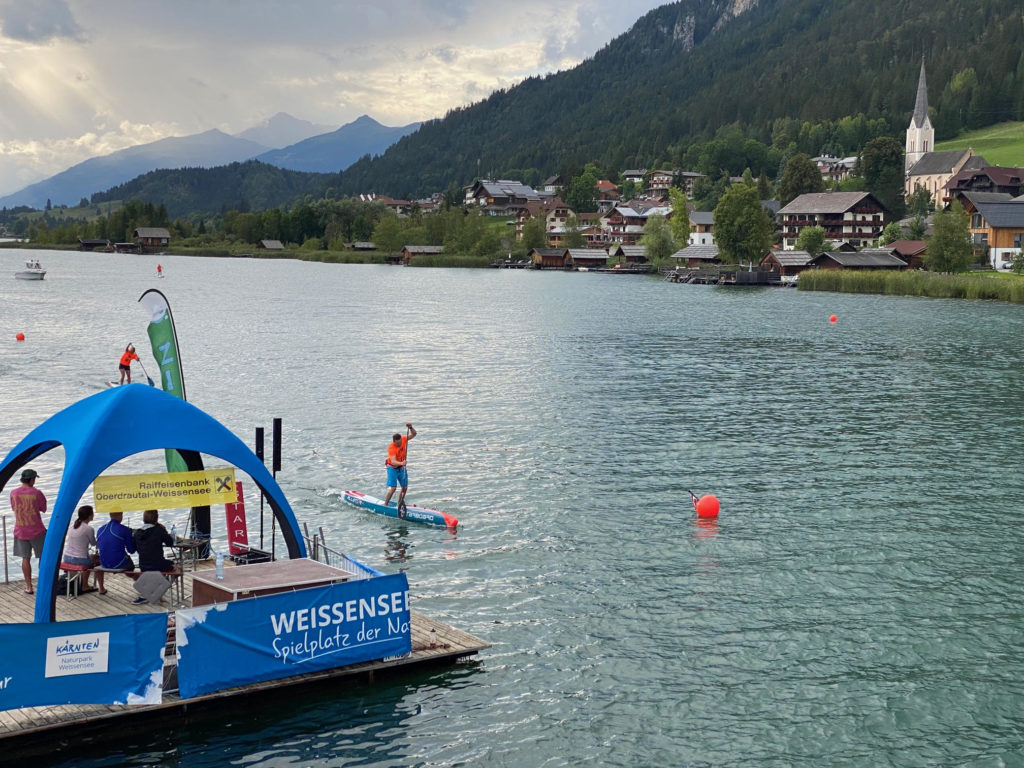
A wonderful landscape, great drivers and, thanks to a bridge crossing the lake, a great view for the audience made for a great experience!

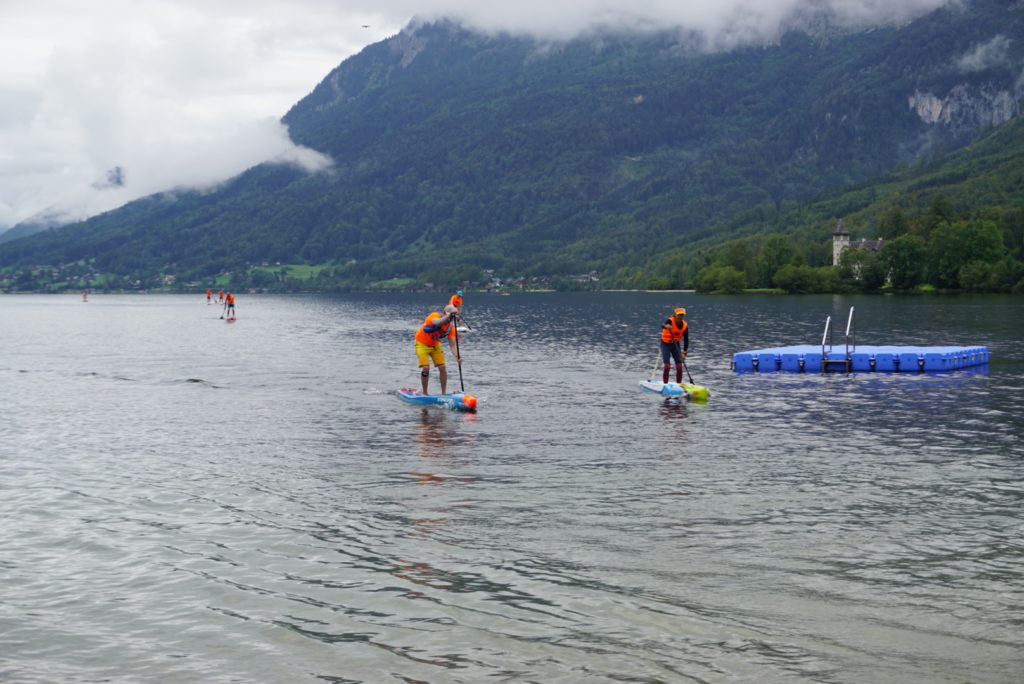
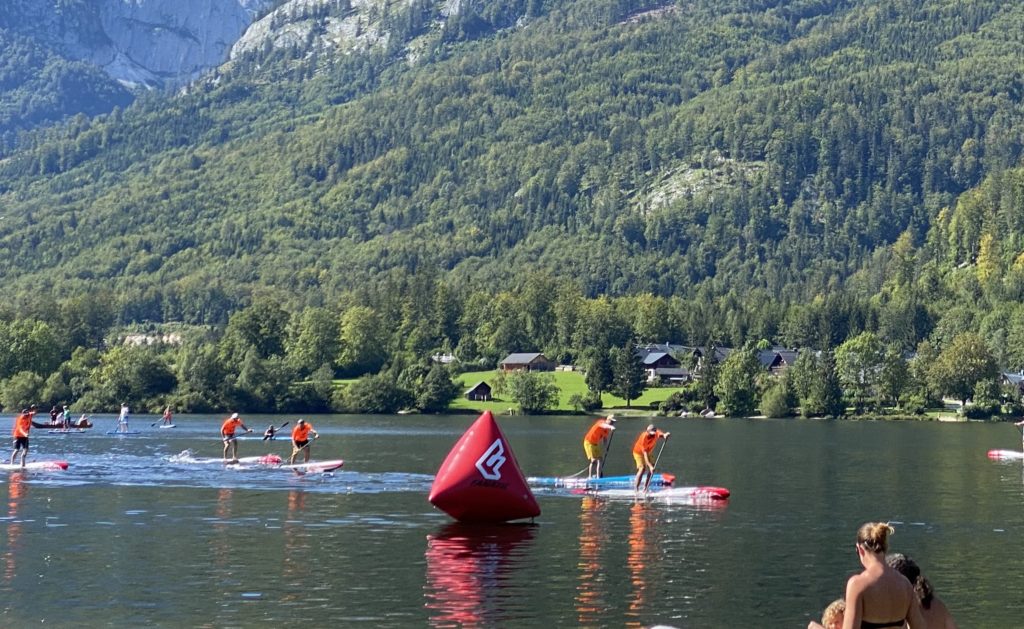
The event started relatively late on Saturday at 6pm with 200m timetrials head to head with 21 competitors. I started in the last heat with two others and could manage to finish first with a time 1:05min while facing some headwind (I’ll post the official results as soon as they are here). The result was good enough to compete in the A-Finals, where the 10 fastest paddlers went for a second round. After a lousy start, which forced me to switch paddling side after only 4 strokes, I had to deal with a massive chop from the two fastest guys, but I had zero issues to keep on track. In the end I was pleased about my 6th place.

First heat…great board for a good result.

Long Distance Race 12km

I don’t really know what happened to me when packing for this event, I knew it would get warm and normally I have to hydrate my body like crazy – I forgot to take my beloved camelbak with me . I tried to figure out how to place a Gatorade under the handle in case I would need it. Half emptied and squeezed I finally found a way to secure it.

The race started on Sunday at 11:30AM and I tried to keep up a good pace while keeping my heart rate low. The race consisted of 3x4km laps and during the first two rounds it was surprisingly easy to hold a consistent good pace while keeping some reserves for the last round.

My turns were soooo bad and I really have to practice them, but after I could always do some short sprints, I finally finished 10th overall with a strong last lap. Not a drop of liquid was needed during the race. I used the QB Trifecta 96 and with the respectable glide of the Allstar it was a pleasure to paddle this track with low cadence.

What the hell was I doing? #badturning

The Allstar is such an easy ride and serves you well when drafting, dealing with chop, sidewaves and other stuff. Stability wise it was a bit of an overkill for this environment, but it was good to see that it’s possible to race against the sub 24″ fraction and get good results.

Obviously there are faster boards out there, but I’m not sure if there’s an allwater raceboard that would suit better for an average paddler like me.

Here are the results of the Weissensee Classics race:

In the 24/7 ranking (Boards wider than 24″) I could win the LD-Race and finish second in the 200m sprint.

https://www.weissensee-aktiv.com/events/austrian-sup-tour-15-16-august-2020/ergebnisse/

If you want to have a deep dive into my stats of this race, you can check out the link below 😉

Specs and more

If you want to have more specific information about this board I’ll do my best to answer your questions.

Final Verdict

This board is absolutely great in every aspect and if you’re searching for a board that can do it all with performing excepional in more challenging conditions, this is the right board for you.

There are a few circumstances where I would not recommend taking a closer look at this board. If you’re searching for a typical leaders board and you’re paddling mostly in flatwater, there is still the Sprint out there and many other good working designs. It’s also a comparable “wet ride” like the older Allstar Models as there will always be some water on the standing area, if you don’t want that… take a closer look at the Sprint, or other Dugout Boards with either a higher standing area, or a drainage valve system. *Meanwhile I got the information that there are stick on drain covers available (aftermarket), to prevent water entering the deckpad!

Compared to my Allstar 2019 you can save some energy when traveling with 70-80% of power. The lowered cockpit ensures a safe feeling without appearing claustrophobic due to its wide standing area (3cm wider than the Allstar 2019).

Besides it being a fast allwater raceboard, I had so much fun playing around with this board, and when conditions are getting messier it gets even better. There are many more boards which are working great in calm water, but very few of them which are screaming to get pushed into waves 😉

Coming up next: Starboard Allstar 2021

Big changes to be expected and next week I’ll hopefully be able to share everything you want to know about the new Starboard Allstar 2021!

I’ll do some testing and compare the rock solid and easy to ride 2019 Starboard Allstar 14×24,5 with the latest revision of this legendary allwater race board. As testing would only be fair when comparing same sizes, it’ll be a 14×24,5.

In the last months I was able to dial in my paddling technique with the Allstar and could gain speed. At my home track average speeds of 9km/h are no longer reserved for the strike as I could manage to achieve those traveling speeds with the Allstar as well as with the SIC RS.

Starboard Allstar 2019 14×24,5 paired with the Quickblade Trifecta 96 at the SUP Battle 6.0

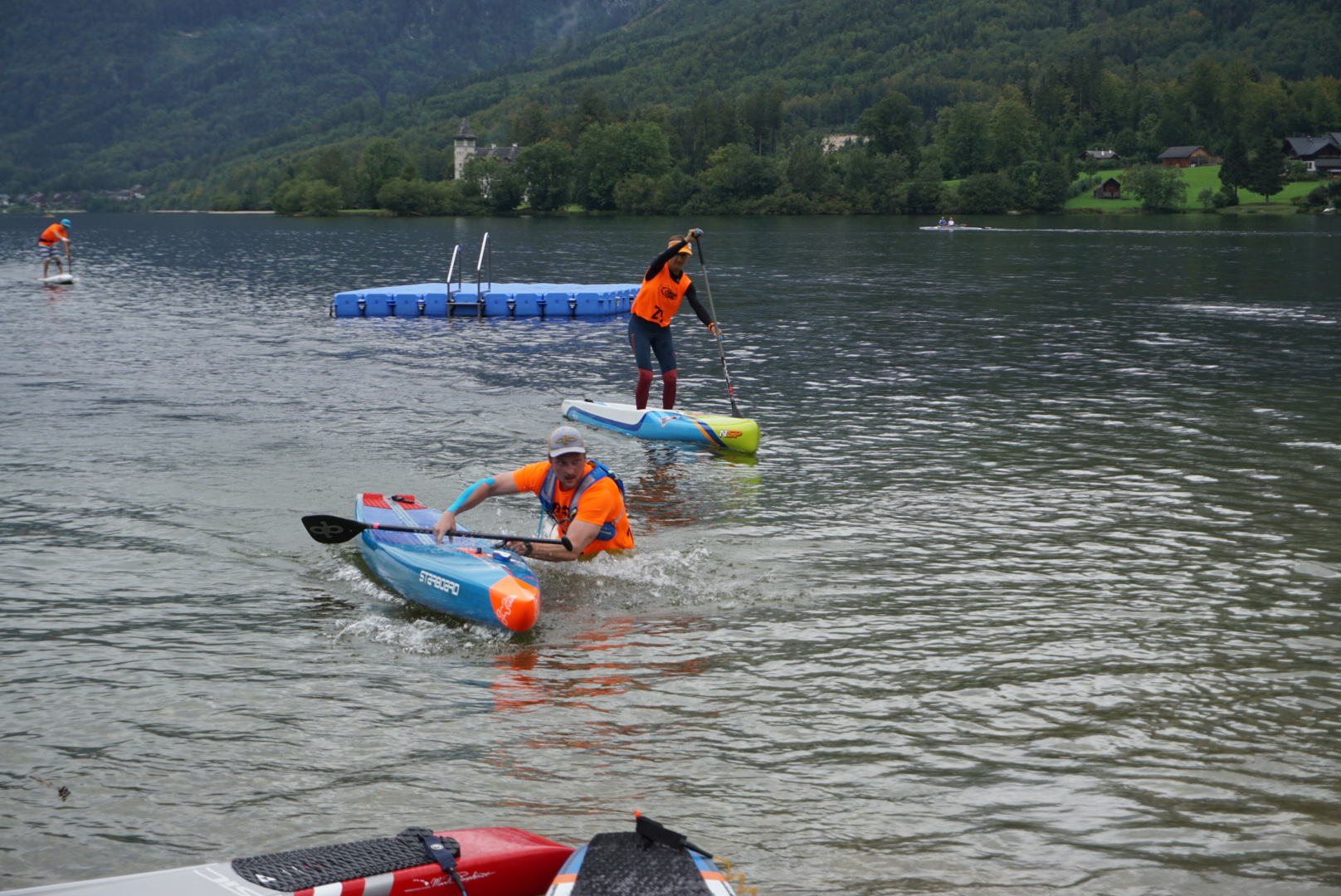
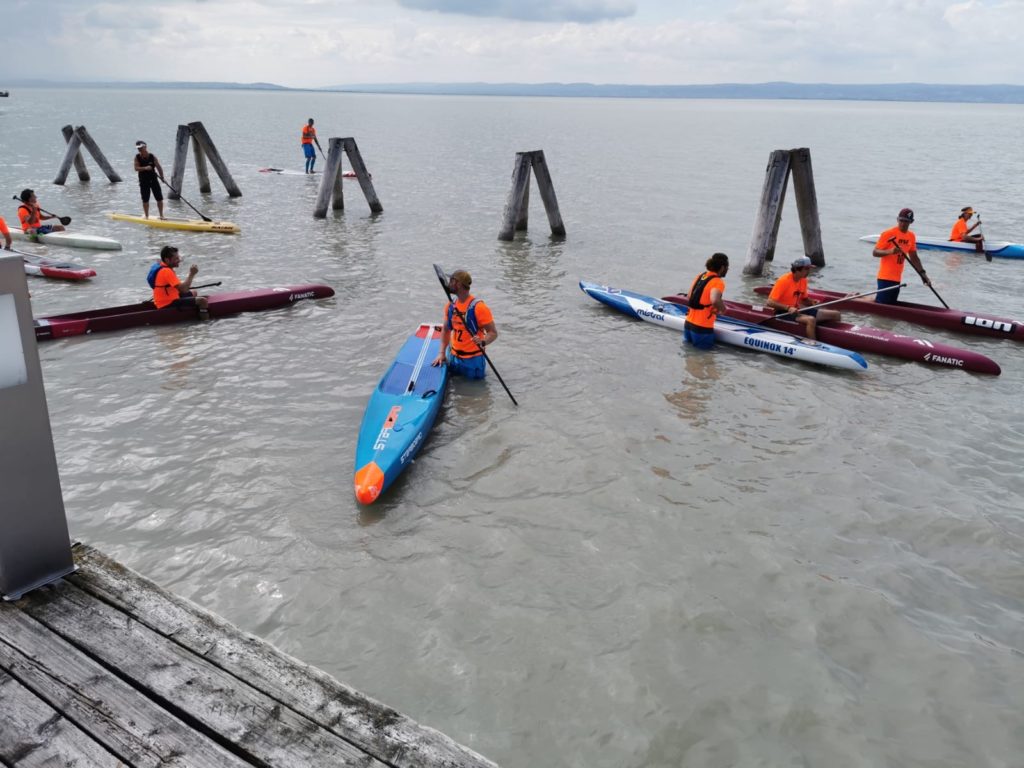
At the SUP Battle 6.0 at lake Neusiedl, I finished the effectively 8,2km Bauminsel-Classic Race at 12th position while finishing second place in the 24/7 class (24″ and wider). Facing side chop and wind, the Allstar 2019 was the best board I could wish to stay on track and most importantly feeling comfortable putting down power onto the blade.

For those of you being interested in my Garmin measurements:

Guess what, I’m really a big fan of this board, so I’m really excited to find out what these big changes are leading to… stay tuned

Raceboard Comparison 10km

While not being able to compete in a 2020 race season head to head, austrias fastest paddler Chris Diver started an online Competition with the Corona SUP Timetrial Challenge to stay motivated and compete at online challenges, ranging from 10km, 5km, 1km-races and last but not least a 200m sprint time trial.

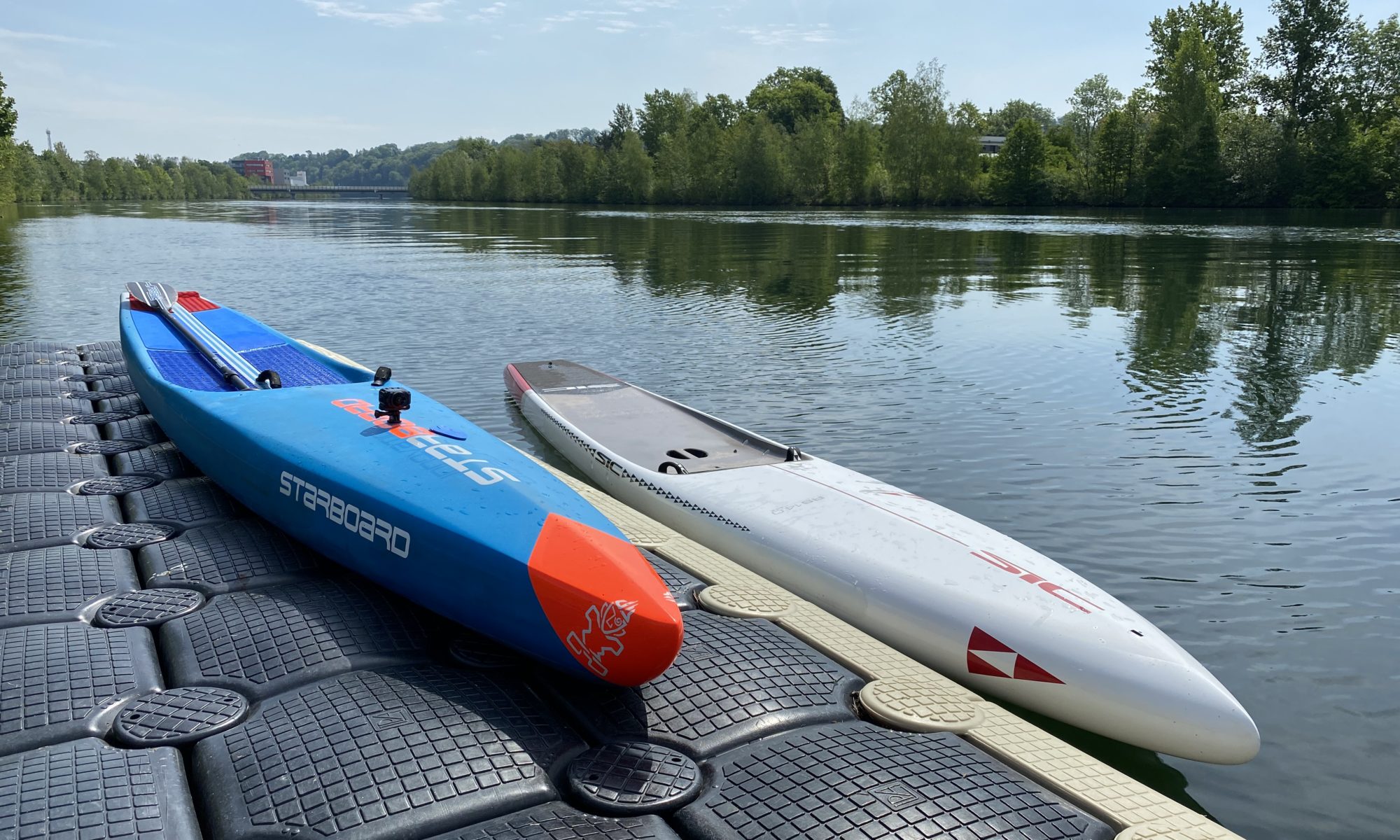
Also a great opportunity to compare my raceboards at race distances 😉

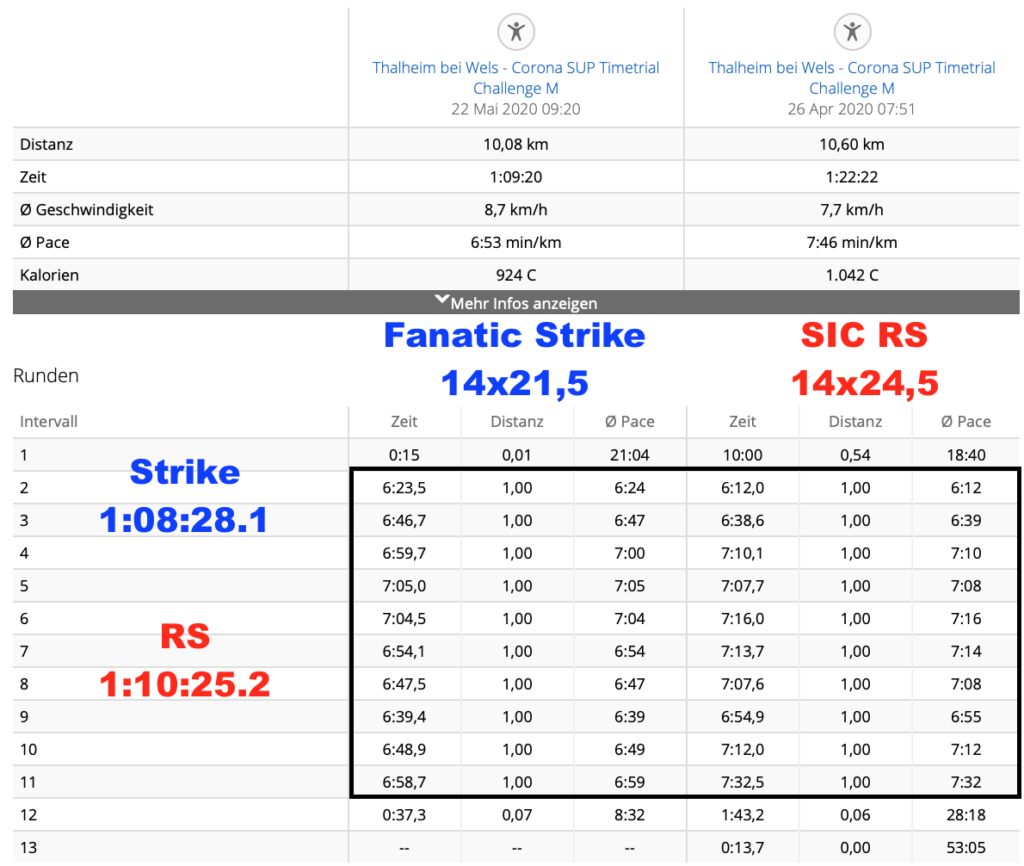
1:10:25 vs 1:08:28

The first challenge was a 10k time trial, I did with the board I felt most comfortable paddling longer distances. As I paddled nearly 400km with the SIC RS, I thought it was a good idea to start with this board and had a great run with near perfect conditions at the traun.

I started 5km down the river with minor current and only slight headwind, one turn and back to the starting point. The RS felt very familiar, was easy to track and saved a lot of energy in the lower body, but it likes to be paddled in less than ideal conditions. The last km was a little hard for me, as sun came out and led to sous vide cooking me in my drysuit 😀

Second attempt- Fanatic Strike 14×21,5

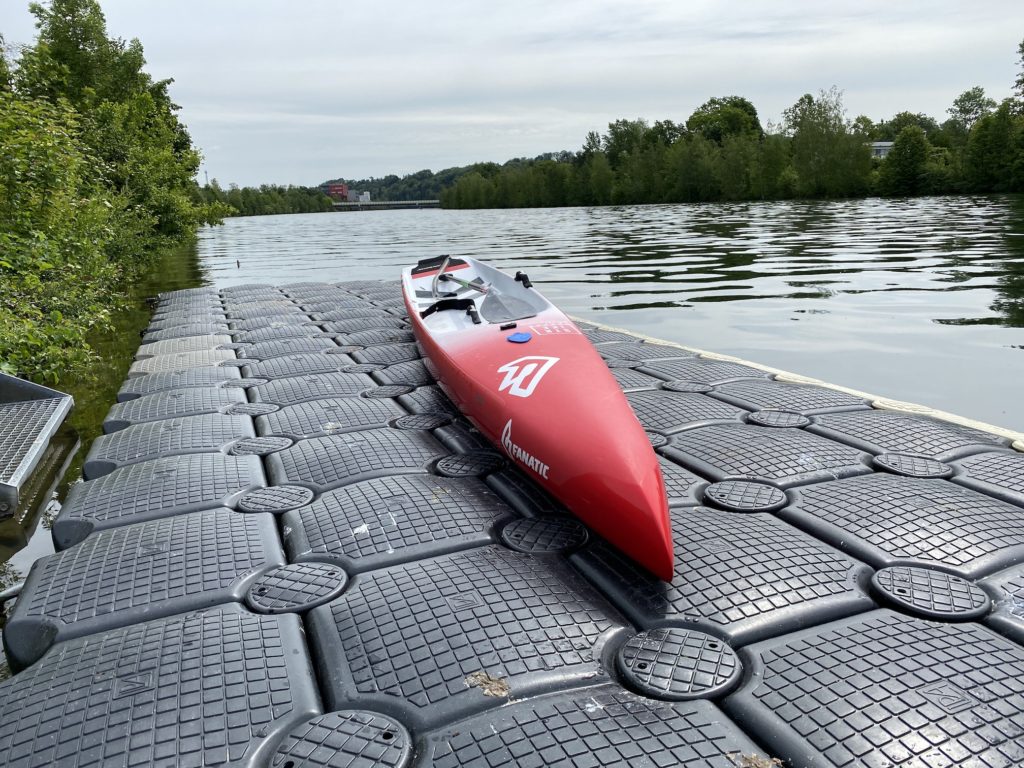
At the end of this challenge a second 10k time trial should have been done at the same spot with hopefully comparable conditions. This time I chose the Fanatic Strike 2019 and while lending my favorite fin to a sup buddy, I had to use the stock fanatic fin I feel less than comfortable with. With some stability and tracking issues but equipped with a new larger paddle, the fantastic Quickblade Trifecta 96, I was able to finish 2min faster than the first time. The first kilometers I was facing much stronger headwind than in the first run and had to deal with slight choppy water. Nevertheless I could hold the pace until the end of the run while not being totally wasted.

5k – 33:29

So there is only one run left to tell you which board is fastest at this particular spot.

Stay tuned to find out if I’m able to double the time I was able to do with the Allstar at the 5k time trial. This was at a different spot with much more current and of course half the distance, so I’m really excited to find out what’s possible with the Allstar.

Starboard Allstar 2019/2021

Right now it’d be a little unfair to post my results with the Allstar as my paddling technique improved by some margin. Therefore it’s clear that now I can manage to do the 10k easily at 8,7-8,8km/h.

There is a totally different feeling in how I can do those average speeds.

With the Starboard Allstar 2021 14×24,5 it takes a lot less energy to keep this board moving with good traveling speeds. The Fanatic Strike on the other hand needs a lot of power to get it up to good speeds, but saves you some energy when pushing it beyond 9km/h, where the Allstar can’t hide it’s still an allwater board.

During Races different things like drafting etc have to be considered when comparing raceboards and in this case both Allstar Models perform exceptionally well due to their rocker, nose shape and forgiving handling.

Hopefully I can do some more tests at the end of the season where new time trials have to be done.

Until then…stay tuned for some other stats and feel free to ask me whatever you want to know.

Raceboard Comparison Traun Short Lap 3,7km

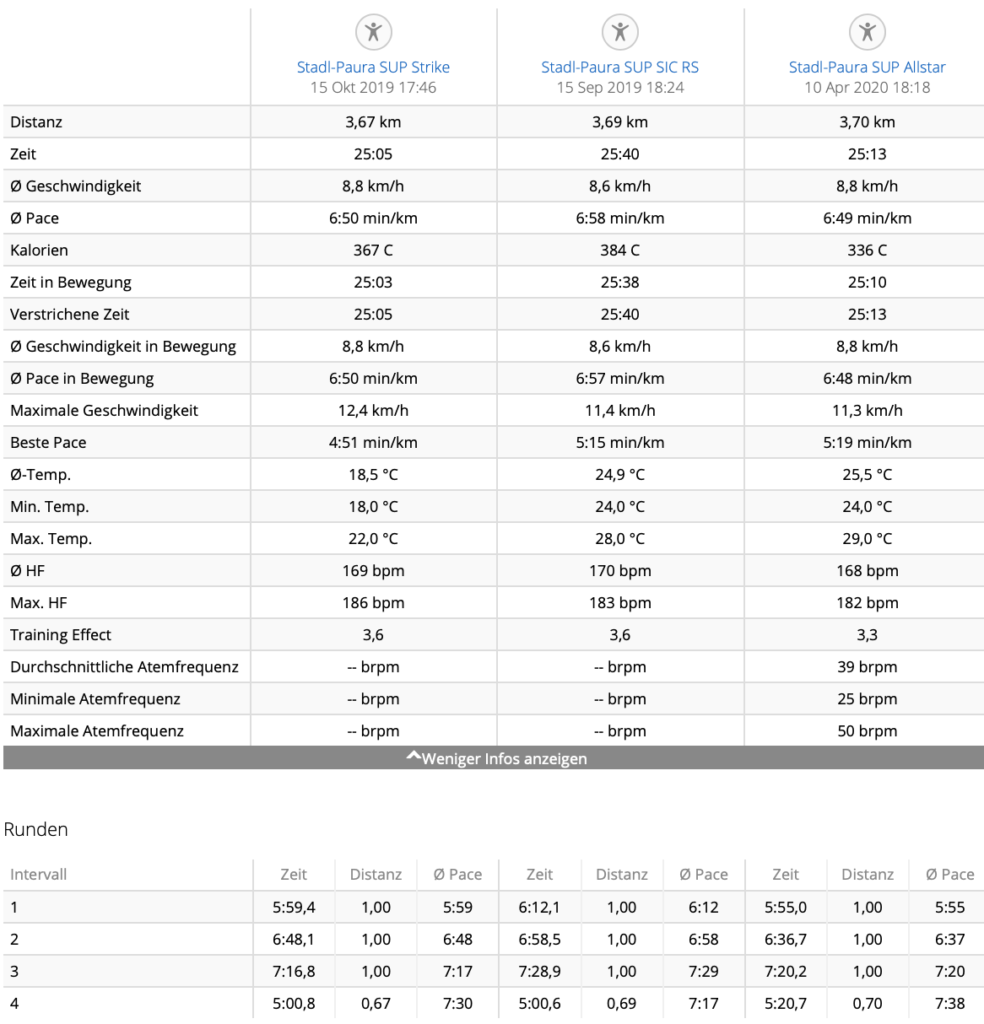
Here we are, … these were the best results I could manage to do in the last months on the short lap Traun with 3,7km :

I know that with my paddling technique I’m bobbing up and down too much and I tried to achieve my goals with lowering my strokes per minute in order to focus on a clean catch and strong power phase.

Aktivieren Sie JavaScript um das Video zu sehen.
https://youtu.be/PDHbLG35yEQ

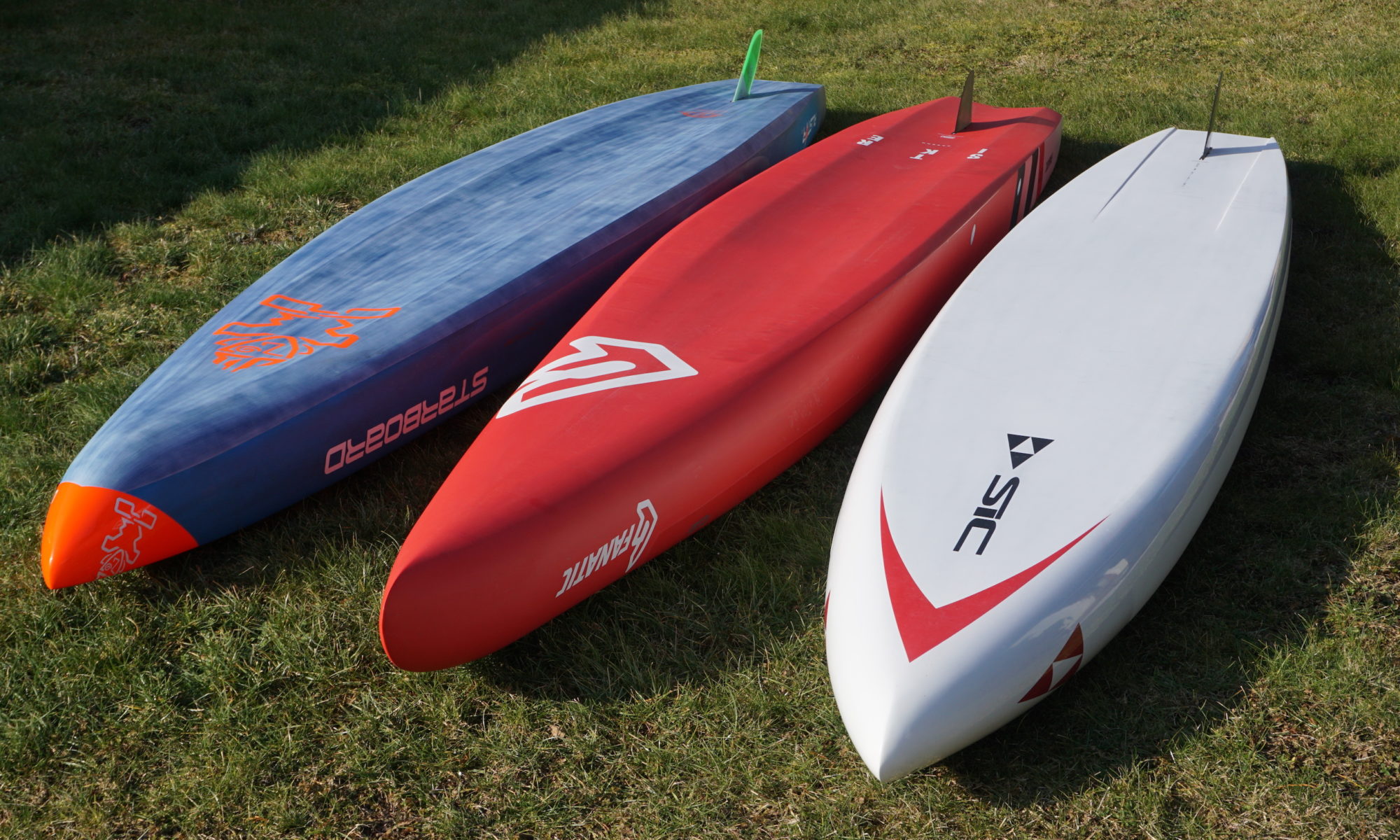
By now I’ve been paddling 99km with the Allstar, 263km with the Strike and 356km with the RS. For sure, the strike is the tippiest board out of those three and it likes to be paddled with high cadence and a very clean technique. As I’m a heavier rider, a narrower board with low projected bottom area is harder to get planing and sinks down faster, when entering the recovery phase.

During the power phase you can feel that the drag factor is lower with the strike, but when sprinting, it’s way harder to lift it out of the water and getting to top speeds.

The RS feels very easy to paddle and my results were very consistent, with it being always within +/-5 seconds per km. It’s also the easiest board to accelerate due to its low weight and large and simple bottom shape.

I think the Allstar is faster than the RS because of its sleeker nose shape, what also makes it easier to catch the paddle parallel to the rails.

Whilst at flatwater conditions each board is relatively easy manageable, things are changing drastically when hitting bumps! The Allstar with its high profile nose likes to go over each wave and there’s little chance that water flows over the high volume Nose, but the higher standing area compared to the RS and Strike do sometimes feel a little less safe.

When paddling upwind my feelings totally fooled me, as the strike cuts through waves like a hot knife through butter and splited higher bumps effortlessly with it’s deep concaved bottom shape. So it had to be really fast, or?

As watched the time I was a bit shocked as the RS and the Allstar have been more than a minute faster! The RS felt slowest but maybe that’s because it seems to hit the waves way harder than the opponents you can also feel the board flexing a lot. Higher waves tend to be pierced, rather than going over the bumps as with Allstar . The Allstars bottom shape makes the ride over bumps quieter and there is also flex in the board, but it’s definitely faster recovering and less noticeable.

Aktivieren Sie JavaScript um das Video zu sehen.
https://youtu.be/TB37o3qpBKc
As you can see the river Traun isn’t always dead flat 😉

If the RS feels like an elastomere damper, the Allstar seems being spring loaded. The Fanatic Strike is sooo stiff, there is no chance to feel any flex, what makes it feel very connected and solid.

I have to work on a proper technique to master the Strike, but when facing difficult conditions I would always go the safe route and take the RS or the Allstar.

In those dreamy weather conditions you’ll be fine with each of these boards 😉

In the last weeks there were some online challenges I could use to gather some data and I’ll post my findings soon!

By now I wanna thank you and please let me know if you have any questions 🙂